
resources
Discover the 10 Largest States in US: A Comprehensive Ranking by Area
11 Apr 2026

Contemplating the sheer vastness of the United States, one might easily feel a sense of awe—and perhaps a touch of being lost—amidst its immense scale. Indeed, from one coast to the other, a remarkable tapestry of diverse landscapes and captivating locales awaits discovery. But have you ever paused to consider which states command the most significant acreage? We're about to delve into the top 10 largest states in the United States by land area. It’s quite a compelling list, revealing some truly colossal territories.
Key Takeaways
- Alaska is by far the largest state in the U.S., covering more land than the next two largest states combined.
- Texas, the second-largest state, is a massive territory with a significant impact on the national landscape.
- Montana and New Mexico are the third and fourth largest, showcasing the expansive nature of the American West.
- Arizona, Nevada, and Colorado also rank high, highlighting the considerable landmass found in the southwestern United States.
- Oregon, Wyoming, and Michigan round out the top ten, each contributing a substantial amount of land to the country’s total area.
1. Alaska
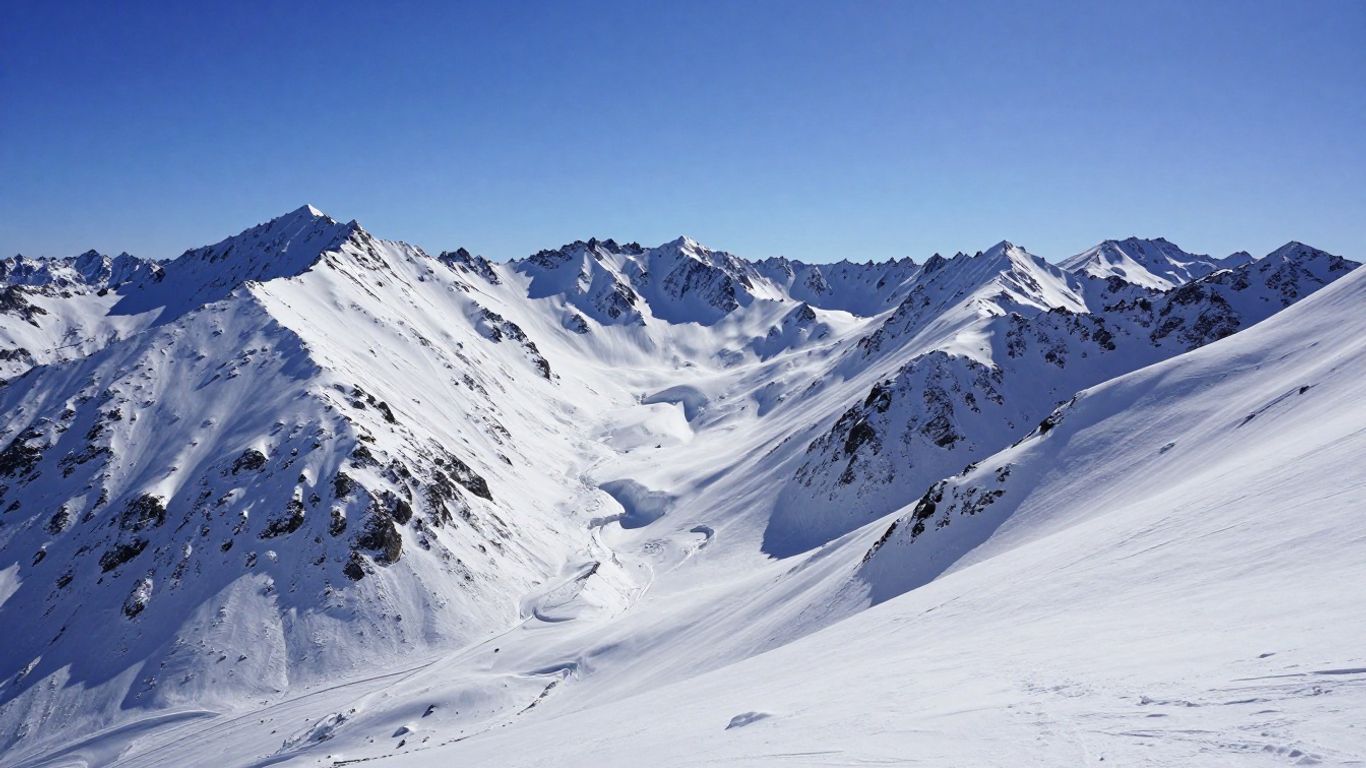
When the conversation turns to the largest states in the U.S., Alaska truly stands in a league of its own. It’s not merely large; it’s absolutely colossal. Encompassing a staggering 570,641 square miles of land, it utterly dwarfs every other state in the nation. To put this into perspective, consider that Alaska is more than twice the size of Texas, our second-largest state. In fact, you could comfortably fit Texas within Alaska’s borders more than two times over!
Just ponder this remarkable fact: Alaska’s immense footprint exceeds the combined landmass of the next three largest states—Texas, California, and Montana. Indeed, embarking on a non-stop drive across its breadth would necessitate approximately 20 hours just to traverse from one side to the other. It is, unequivocally, a place where nature’s unbridled scale is spectacularly unveiled.
Such immense size, naturally, comes hand-in-hand with some truly unique characteristics:
- Vast Wilderness: Much of Alaska remains undeveloped, with huge stretches of untouched wilderness. Many areas don't have roads or any permanent settlements.
- Geographic Extremes: It boasts 17 of the 20 highest mountain peaks in the United States and is home to over 100,000 glaciers.
- Water Abundance: Beyond its landmass, Alaska has more than 3 million lakes, adding to its impressive natural landscape.
The sheer scale of Alaska dictates that its population remains remarkably sparse. With merely 733,000 residents, it boasts the lowest population density of any U.S. state. What does this mean for visitors? It means you'll discover an abundance of open space and a profound sense of solitude—an increasingly rare commodity.
It is, in essence, a state that truly defines 'big,' presenting a landscape unparalleled elsewhere in the country. For those keen on exploring the northernmost reaches of the U.S., one might typically find themselves flying into a major hub such as Seattle, Washington, before continuing their journey northward.
Related Contents: biggest state in usa
2. Texas
Securing its position as the second-largest state in the U.S. by land area, Texas encompasses a truly massive 268,596 square miles. It is, without a doubt, a place that lives up to its iconic moniker, "The Lone Star State," boasting a rich history alongside its famously wide-open spaces. While many might immediately conjure images of cowboys and vast oil fields, Texas, in reality, is a significant force across a multitude of other industries as well.
Its sheer geographic footprint—what a marvel—translates into an incredibly diverse landscape. Here, one can encounter everything from the verdant piney woods of East Texas to the starkly beautiful arid desert landscapes of the west, not to mention its extensive coastline along the Gulf of Mexico. Indeed, traversing the state can feel akin to visiting several distinct regions within a single journey.
Here's a quick look at some key facts:
- Size: 268,596 square miles (695,662 square kilometers)
- Rank: Second largest state by land area
- Nickname: The Lone Star State
- Bordering States: Oklahoma, Arkansas, Louisiana, and New Mexico
Texas’s storied past as an independent republic, prior to its admittance to the U.S. in 1845, has indelibly shaped its unique culture and distinct identity. This rich history, coupled with pivotal events such as the Mexican-American War, profoundly influenced the state's borders and subsequent development.
The state's immensely varied landscapes include the picturesque rolling hills of Central Texas, the expansive high plains of the Panhandle, and the rugged, striking Guadalupe Mountains out in West Texas. This impressive geographical diversity, it must be said, plays a crucial role in its multifaceted economy and wide array of attractions.
3. California
California, affectionately known as the Golden State, proudly secures the third position on our comprehensive list of the largest U.S. states by total area. It's undoubtedly a place that frequently springs to mind when envisioning the United States, celebrated for its iconic coastline, remarkably diverse landscapes, and influential major cities. The sheer magnitude of California—it's truly impressive—encompasses a vast expanse of land along the West Coast.
When discussing California’s total area, it's crucial to bear in mind that this measurement includes far more than just dry land. Indeed, the state boasts a significant amount of internal water area, which, of course, contributes notably to its impressive overall ranking. Let's take a quick glance at the pertinent figures:
| Category | Area (sq mi) | Area (sq km) |
|---|---|---|
| Total Area | 163,696 | 423,967 |
| Land Area | 155,959 | 403,933 |
| Water Area | 7,737 | 20,033 |
Beyond its impressive dimensions, California is renowned for its dynamic and often volatile geography. As a component of the Pacific Ring of Fire, it naturally experiences considerable seismic activity. This inherent geological characteristic fundamentally shapes the state, influencing everything from its natural landscape to its unique building practices.
Residing in California inherently means maintaining an awareness of its potent natural forces. The state possesses a long and well-documented history of contending with earthquakes and various other geological events. Consequently, stringent building codes and robust emergency preparedness protocols constitute a significant aspect of daily life here, truly reflecting the realities of inhabiting such a geologically active region.
California’s sheer size also implies an extraordinary variety of environments within its borders. Here, one can discover everything from scorching deserts to majestic mountains and verdant, fertile valleys. This remarkable diversity serves as a primary magnet for the multitude of people drawn to California, and it’s a key factor in why the state plays such a pivotal role in the nation’s economy and culture. It is, unequivocally, a state that truly presents a wealth of offerings, both in terms of physical space and the myriad opportunities it affords.
4. Montana
Montana, fondly known as "Big Sky Country," is a state that, without question, truly lives up to its evocative nickname. It proudly ranks as the fourth largest state in the U.S. by land area, encompassing a truly massive 145,545.80 square miles. Just imagine—that’s an incredible amount of wide-open space!
This immense vastness, in turn, ensures you’ll encounter incredibly diverse landscapes—from the rugged, formidable peaks of the Rocky Mountains in the west to the gently rolling plains that gracefully stretch eastward. It is, quite simply, a place where nature unequivocally takes center stage.
Geography and Landscape
Montana’s geography is predominantly defined by its majestic mountains and expansive plains. The western portion of the state forms a significant part of the Rocky Mountains, proudly featuring stunning national treasures like Glacier National Park and other regions celebrated for their dramatic scenery and exceptional outdoor activities. As one progresses eastward, the terrain gracefully transitions into the Great Plains, an area distinguished by its sweeping grasslands and a notably more arid climate. This captivating contrast, wouldn't you agree, renders Montana a truly visually striking state?
Population Density
Given its truly enormous size, Montana predictably exhibits one of the lowest population densities in the United States. With approximately 1.1 million residents distributed across its vast territory, one can truly grasp the immense amount of room available to roam. The average population density hovers around 7 people per square mile—a figure that powerfully underscores the state’s inherently rural character and its abundant, undeveloped open land. This remarkably low density, it's fair to say, significantly contributes to its well-deserved reputation for solitude and pristine natural beauty.
Key Facts
- Total Area: 145,545.80 sq mi (376,961.9 km²)
- Approximate Population: 1,084,225
- Population Density: 7/sq mi (3/km²)
- Major Mountain Ranges: Rocky Mountains
- Eastern Terrain: Great Plains
Montana’s sheer geographic expanse means that traversing from one side of the state to the other can indeed be quite a substantial journey. It is, after all, a place that actively encourages deep exploration and a profound appreciation for the immense scale of the American West. And, as a delightful bonus, one can often discover superb beef here, proudly raised on those very same wide-open ranches.
5. New Mexico
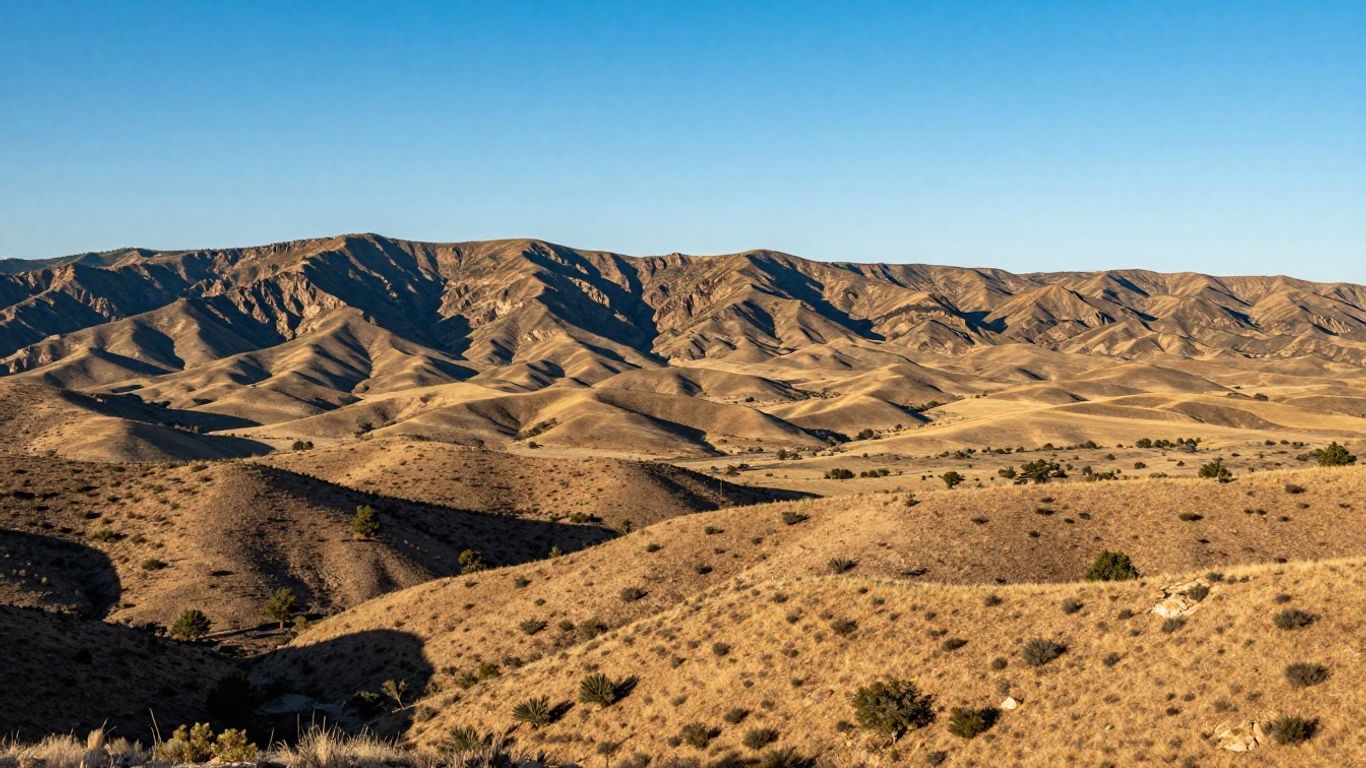
Securing the fifth spot on our list of the largest states by area is New Mexico—aptly known as the "Land of Enchantment." This captivating state encompasses a massive 121,298 square miles, providing ample room for extensive exploration. Its landscape is—to say the least—quite unique; primarily characterized by high desert, it also boasts impressive mountains and expansive arid plains. It’s truly a place where ancient adobe architecture harmoniously coexists with striking desert vistas.
New Mexico’s rich history is inextricably linked to its deep Native American and Spanish roots. Following the conclusion of the Mexican-American War, it formally acceded to the U.S. in 1848. This profound historical context, as you might imagine, is visibly woven into the very fabric of the state, from its distinctive architecture to its enduring traditions.
Here are a few things that make New Mexico stand out:
- Vast and varied terrain: From the Chihuahuan Desert to the Sangre de Cristo Mountains, the geography is diverse.
- Rich cultural heritage: Influences from Native American tribes and Spanish settlers are prominent.
- Culinary fame: It's known as the "Chile Capital of the World," with chile peppers being a big part of its identity and economy.
The meticulous method by which surveyors demarcated many western states—employing precise straight lines of latitude and longitude—explains why places such as New Mexico exhibit such remarkably regular geometric shapes. This approach, you'll find, contrasts quite sharply with the older states, whose boundaries often developed far more organically.
When one truly contemplates the sheer size of states like New Mexico, it undeniably offers a profound perspective on the distinct challenges and unique opportunities they encounter, particularly when compared to smaller, more densely populated regions. It is, indeed, a vast country we inhabit, and New Mexico undeniably constitutes a significant portion of that immense expanse. For those interested in delving deeper into the history of land acquisition in the U.S., further details can be found concerning the Mexican Cession.
6. Arizona
Securing the sixth spot, Arizona is a state that truly, and quite literally, lives up to its iconic moniker, "Grand Canyon State." It is, indeed, a massive territory, encompassing a total area of approximately 113,998 square miles. While many might immediately conjure images of endless, sun-baked desert when contemplating Arizona—and yes, there's certainly an abundance of that, complete with iconic saguaro cacti standing sentinel—it's important to recognize that it's far from solely sand and scorching heat.
Arizona, in fact, boasts a remarkably diverse landscape. Beyond its renowned desert floor, one can discover cooler, verdant forests nestled high in the mountains and, naturally, the awe-inspiring, jaw-dropping canyons. The Grand Canyon itself remains, quite obviously, a colossal draw, but the state also offers other spectacular natural wonders, such as the iconic red rocks of Sedona. It is, undeniably, a state blessed with vast open spaces, which largely explains why its population density remains relatively low, even with prominent urban centers like Phoenix.
Here's a quick look at its size:
| Area Type | Size (sq mi) |
|---|---|
| Total Area | 113,998 |
| Land Area | 113,594 |
| Water Area | 404 |
This compelling mosaic of desert, mountains, and canyons ensures that Arizona nurtures a wide variety of unique plants and animals. It truly is a place where visitors can deeply immerse themselves in the rugged, untamed beauty of the American Southwest. Furthermore, one will discover historic mining towns gracefully scattered throughout, seamlessly adding a rich layer of human history to the already breathtaking natural scenery.
Arizona’s expansive dimensions mean it’s certainly not a monolithic landscape. One can, in fact, transition quite easily from scorching hot desert environments to refreshingly cooler mountain air, all contingent upon one's location within the state. It is, ultimately, a state that presents a diverse array of distinct environments just waiting to be explored.
7. Nevada
Securing the seventh position on our compilation of the largest states by area is Nevada. This iconic Western state encompasses a truly massive amount of territory, much of which, it must be noted, is characterized by arid desert landscapes. It’s a region widely recognized for its expansive, wide-open spaces and, naturally, its world-renowned entertainment hubs.
Nevada spans an impressive 109,781 square miles, establishing it as a significant player when considering sheer landmass. Intriguingly, however, its population density remains remarkably low, averaging merely 28 people per square mile. Consequently, there remains an abundance of undeveloped space—plenty of room to roam, indeed.
Its evocative nickname, "The Silver State," fittingly stems from Nevada’s rich and storied history of silver mining.
Here are some key facts about Nevada:
- Nickname: The Silver State
- Capital: Carson City
- Largest City: Las Vegas
- Statehood: 36th state, admitted October 31, 1864
A significant portion of Nevada’s terrain is defined by the expansive Great Basin Desert, which notably features a distinctive series of north-south mountain ranges interspersed with broad, flat valleys. One will also encounter the formidable Mojave Desert in the southern reaches of the state. Notwithstanding these often arid conditions, Nevada remarkably harbors diverse ecosystems and numerous unique geological formations.
Nevada’s sheer vastness implies that while its major urban centers, such as Las Vegas, exhibit considerable population density, vast portions of the state remain sparsely inhabited. This creates a truly stark and compelling contrast between vibrant urban energy and profound remote wilderness.
8. Colorado
Securing the eighth position on our list of the largest states by land area is Colorado. This majestic Mountain State encompasses a total area of 104,094 square miles, firmly establishing its role as a significant geographical player in the U.S. landscape.
Colorado’s distinctive geography is largely defined by its dramatic and often breathtaking elevation changes. It proudly hosts a significant portion of the iconic Rocky Mountains, with Mount Elbert, standing at a towering 14,440 feet, reigning as the highest peak in the entire range. This remarkable high-altitude environment, naturally, sculpts everything from its variable climate to its unique ecosystems.
When one considers its sheer size, Colorado is indeed quite substantial—an expanse larger than the United Kingdom and marginally greater than Oregon. The state's notably rectangular shape is a direct consequence of historical land divisions, particularly those stemming from the Louisiana Purchase and Mexican Cession, periods during which surveyors meticulously employed straight lines of latitude and longitude. This methodical approach stands in stark contrast to many smaller, often irregularly shaped states found in other regions of the country.
Here are some key figures for Colorado:
- Total Area: 104,094 sq mi (103,642 sq mi land area)
- Highest Point: Mount Elbert (14,440 ft)
- Region: Mountain States
The vast, sweeping open spaces and highly varied terrain of Colorado collectively present both distinctive opportunities and formidable challenges. These geographical realities profoundly influence everything from population distribution patterns to intricate resource management strategies across its considerable, impressive expanse.
9. Oregon
Securing the ninth spot on our list of the largest states by land area is Oregon. This quintessential Pacific Northwest state encompasses a total area of 98,379 square miles—a truly substantial figure when you consider it. For context, it’s notably larger than the United Kingdom.
Oregon’s landscape is, without exaggeration, incredibly diverse. One can experience the rugged, dramatic coastline bordering the Pacific Ocean, the verdant, lush forests of the Coast Range and the fertile Willamette Valley, and then—moving eastward—the notably drier, high desert terrain situated beyond the Cascade Mountains. The Cascades themselves proudly host Mount Hood, the state’s highest peak, which is, remarkably, a dormant volcano.
Here’s a quick look at some key figures for Oregon:
- Total Area: 98,379 sq mi (403,466.3 km²)
- Land Area: 95,988 sq mi (248,608 km²)
- Water Area: 2,391 sq mi (6,191 km²)
When people envision Oregon, their minds often conjure images of its verdant forests and characteristically rainy climate, particularly in the western regions of the state. However, the eastern side presents a stark contrast, boasting significantly more sunshine and a decidedly drier climate, thereby supporting entirely different types of indigenous plant and animal life. This remarkable variety renders Oregon a truly fascinating place, both geographically and ecologically. It is, in essence, a state that magnificently showcases the diverse landscapes the United States graciously offers, ranging from breathtaking coastal beauty to imposing mountain grandeur and expansive high desert plains. The Portland-Vancouver-Hillsboro MSA, it should be noted, serves as a significant population center within the state. Further details regarding its geography and demographics can be accessed on dedicated state data pages.
The state is justly celebrated for its unparalleled natural beauty, ranging from the awe-inspiring Crater Lake National Park—home to the deepest lake in the United States—to the iconic Columbia River Gorge, renowned worldwide for its majestic waterfalls.
10. Wyoming
Rounding out our top ten list of the largest states by area is Wyoming. This quintessential western state encompasses a truly significant amount of territory, and it’s justly renowned for its expansive, wide-open spaces and utterly stunning natural beauty. When one envisions vast, largely undeveloped landscapes, Wyoming, more often than not, immediately springs to mind.
Wyoming’s land area is, frankly, impressive—solidifying its position as a key player in the sheer scale of the American landscape. It truly is a place where one can intimately experience the immense magnitude of the country.
Here are some key figures for Wyoming:
- Total Area: Approximately 97,813 square miles.
- Land Area: Around 97,093 square miles.
- Water Area: Roughly 720 square miles.
The state’s geography is remarkably diverse, showcasing majestic mountains, sprawling plains, and high desert plateaus. Its notably low population density translates to vast portions of its land remaining largely undeveloped, thereby offering an unparalleled sense of solitude and a profound connection to nature—qualities increasingly difficult to discover elsewhere.
Wrapping Up Our Look at America’s Largest States
And so, there you have it—our comprehensive overview of the top 10 largest states in the U.S. by land area. It's quite remarkable, isn't it, to truly contemplate the sheer amount of space these magnificent places encompass? From the unparalleled vastness of Alaska to the expansive, sprawling landscapes of Texas and myriad others, these states spectacularly underscore the sheer scale of the entire country. This exploration, we hope, fosters a deeper appreciation for the diverse geography the United States so generously offers. Perhaps this journey has ignited a nascent interest in personally exploring these immense territories, or perhaps it has simply provided a newfound appreciation for the intricacies of geography. Regardless, grasping these distinctions in size undoubtedly helps to paint a clearer, more nuanced picture of the American landscape.
Frequently Asked Questions
Which U.S. state reigns as the largest by land size?
Alaska is, without question, the largest state in the U.S. It's so expansive, in fact, that its landmass surpasses that of the next two biggest states combined! Its colossal size encompasses over 570,000 square miles, presenting an immense expanse of wilderness and wonderfully varied landscapes.
What is recognized as the second-largest state in the U.S.?
Texas firmly holds the distinction of being the second-largest state. It represents a vast territory, spanning approximately 268,000 square miles. Texas is widely celebrated for its characteristic wide-open spaces and its remarkably diverse geography, ranging from lush forests to arid deserts.
Are the majority of the largest states predominantly situated in the West?
Indeed, a distinct pattern emerges! The vast majority of the top 10 largest states are located west of the Mississippi River. This group notably includes Alaska, Texas, California, Montana, New Mexico, Arizona, Nevada, Colorado, and Oregon. This geographical distribution is partly attributable to the immense, open territories that were available in the western U.S. during the period of state formation.
What is the distinction between a state's land area and its total area?
Land area specifically denotes only the dry ground contained within a state’s designated borders. Total area, conversely, encompasses both land and all internal water bodies, such as lakes, rivers, and coastal waters. Consider Michigan, for instance: its substantial water area from the Great Lakes dramatically augments its total area when compared solely to its land area.
What historical factors contribute to Western states generally being larger than their Eastern counterparts?
Historically, the original thirteen colonies, clustered along the East Coast, had their boundaries meticulously drawn, often quite precisely. As the nation progressively expanded westward, vast expanses of undeveloped land became available. Surveyors, therefore, frequently employed straight lines based on latitude and longitude to delineate these immense western territories, rather than adhering to natural geographical features. This approach directly led to their considerably larger dimensions.
What contributes to the considerable size of states such as Montana and New Mexico?
Montana and New Mexico rank among the largest states primarily because they constitute portions of the immense territories settled across the American West. They are characterized by sweeping, wide-open spaces, majestic mountains, and arid deserts, thereby exemplifying the expansive nature of this particular region. Their substantial size is a direct reflection of the extensive land availability during the era of westward expansion.


