


resources
Explore the 20 Largest Cities in the World: A 2026 Population Snapshot
19 Apr 2026

Considering where the majority of Earth's population resides? The answer, increasingly, lies within its burgeoning cities—and some of these urban centers are truly colossal. Our focus today is on the 20 largest cities across the globe, places projected to expand even further by 2026. These vibrant metropolises serve as epicenters of activity, driving economies, fostering rich cultures, and shaping the daily lives of millions. It's quite remarkable, isn't it, to ponder the sheer concentration of humanity in a single area, and how these urban landscapes continuously evolve and adapt? Let’s delve into this list, exploring which cities make the cut and what contributes to their immense scale.
Key Takeaways
- The roster of the world's largest cities is in a constant state of flux; a city once holding the top spot may well be surpassed by another.
- Major urban hubs often draw technology professionals, particularly those in fields like AI and cybersecurity, due to a greater abundance of employment opportunities and competitive remuneration.
- Certain cities are distinguished as highly desirable places to live, lauded for their safety, efficient public transportation networks, and comprehensive healthcare services.
- Cities boasting vibrant art scenes, diverse culinary offerings, and significant historical depth typically enjoy widespread popularity among residents and visitors alike.
- Precisely quantifying a city's size can be complex, primarily because the definition of 'city' itself varies—some refer solely to the central urban core, while others encompass the entire surrounding metropolitan area.
1. Tokyo
Tokyo, the dynamic capital of Japan, holds its position as the world's most populous city. What began as a modest fishing village named Edo in earlier centuries remarkably transformed into a formidable urban center by the 17th century. Today, it stands as an undeniable global hub—a nexus for culture, cutting-edge technology, and international commerce.
Indeed, Tokyo is a city of superlatives, proudly home to some of the planet's most iconic landmarks and bustling transport centers.
Here are a few of Tokyo's most notable features:
- Tokyo Skytree: This architectural marvel is recognized as the world's tallest radio tower, providing visitors with truly breathtaking panoramic views of the sprawling city below.
- Toyosu Market: Succeeding the famed Tsukiji, this is the largest wholesale fish market globally, playing a pivotal role in the international seafood trade.
- Shibuya Crossing: Universally celebrated as the busiest pedestrian intersection on Earth, it vividly symbolizes Tokyo's relentless and energetic pace.
- Shinjuku Station: Consistently ranked among the world's busiest train stations, it efficiently serves millions of commuters and travelers every single day.
Despite Japan's overall population experiencing a gradual decline since 2008, Tokyo impressively maintains its standing as the largest city by population, a testament to its enduring appeal and economic strength.
The sheer magnitude of Tokyo's urban expanse is genuinely awe-inspiring, seamlessly integrating ultramodern skyscrapers with venerable historic temples and tranquil gardens. It is, unequivocally, a place where profound tradition and relentless innovation not only coexist but thrive, crafting an urban experience that is truly one-of-a-kind.
2. Jakarta
Next on our comprehensive list is Jakarta, the vast and sprawling capital of Indonesia. This city is a veritable powerhouse, not only for Indonesia itself but also for the entire Southeast Asian region. Situated on the island of Java, Jakarta boasts a remarkably long history, with its official genesis tracing back to 1527.
Historically, it was recognized by several different names, each reflecting its past as a crucial trading hub. The name 'Jakarta' itself is derived from Sanskrit terms signifying 'victorious' and 'accomplished,' a direct homage to a significant military triumph centuries ago. In the 17th century, the Dutch, captivated by its beautiful canals and meticulously planned layout, bestowed upon it the moniker 'Koningin van het Oosten,' or 'Queen of the Orient.' It truly was—and in many ways, still is—a magnificent sight to behold.
Today, Jakarta has evolved into an immense urban area, a bustling metropolis where millions of people live, work, and thrive. It serves as a paramount center for business, culture, and government within Indonesia. The city remains in a constant state of vibrant activity, from its bustling traditional markets to its gleaming modern skyscrapers.
Here’s a concise overview of some key details for Jakarta:
- Population (2026 Estimate): Approximately 33.8 million
- Area (Urban): Around 3,546 square kilometers
- Key Economic Driver: Finance, trade, and manufacturing
- Historical Significance: Formerly the capital of the Dutch East Indies, it was a vitally important trading post
Jakarta, like many large, rapidly expanding cities, contends with a host of challenges, notably severe traffic congestion and issues related to land subsidence. Nevertheless, its dynamic spirit and undeniable economic importance ensure its continued prominence as a major player on the global stage.
3. Delhi
Delhi, officially designated as the National Capital Territory (NCT) of Delhi, stands as India's most populous city and is frequently cited as one of the world's most rapidly expanding urban centers. It’s a place where history and modernity don't merely coexist; they actively interweave, shaping each other in profound ways. One can truly feel the weight of centuries in its ancient architecture, yet it simultaneously buzzes with the vibrant energy of millions navigating their daily lives today.
Delhi's unique character emerges from this compelling blend of its deep historical roots and its undeniably dynamic present. The city functions as a vibrant hub, vividly showcasing India's rich past through its myriad festivals, diverse languages, and a fascinating architectural tapestry of old and new structures.
Here’s a succinct overview of Delhi’s estimated population and geographical area:
| Metric | Value |
|---|---|
| Estimated Urban Area Population (2026) | 32,200,000 |
| Area | 2,344 km² |
So, what exactly makes Delhi so captivating? Well, consider these aspects:
- A Living Museum: Delhi boasts a history that extends back thousands of years, a heritage strikingly evident in its numerous historical sites, which range from ancient forts to magnificent colonial-era buildings.
- Cultural Melting Pot: The city serves as a convergence point for individuals from every corner of India and, indeed, the world, thereby bringing together an astonishing array of languages, cherished traditions, and diverse cuisines.
- Economic Engine: As the illustrious capital of India, Delhi stands as a major nucleus for commerce, political activity, and education, driving significant and sustained economic growth.
The sheer scale of Delhi means it is a city of perpetual movement and ceaseless change. It is a place that truly encapsulates the enduring spirit of India—constantly evolving and looking forward, yet always steadfastly holding onto its invaluable heritage.
4. Guangzhou
Guangzhou, a pivotal city in China, holds significant sway on the global stage, especially when discussing major urban populations. It's a locale steeped in extensive history, yet simultaneously functions as a thoroughly modern hub.
This southern Chinese metropolis stands as an undeniable powerhouse of international trade and rich cultural expression.
Here’s a concise overview of its estimated population:
| City | Country | Estimated Urban Area Population |
|---|---|---|
| Guangzhou | China | 26,900,000 |
Guangzhou's compelling narrative is intrinsically linked to its centuries-long role as a vital port city. It proudly stood as one of the original and most crucial stops on the ancient Maritime Silk Road, a historical connection that profoundly spurred its initial growth. Today, it remains an enormous center for manufacturing and international trade, particularly renowned for its biannual Canton Fair—a monumental trade exhibition that consistently attracts buyers and sellers from virtually every corner of the world.
Beyond its considerable economic importance, Guangzhou also possesses a distinct and vibrant identity. It is widely considered the birthplace of Cantonese culture, profoundly influencing everything from its unique and celebrated cuisine to its specific language and traditional opera. The city has experienced monumental development, with sleek, modern skyscrapers now gracefully standing alongside charming older neighborhoods and historically significant sites.
The rapid expansion and profound transformation of Guangzhou vividly underscore the dynamic nature of urban development in the 21st century—seamlessly blending its deep historical significance with forward-looking, robust economic activity.
5. Mumbai
Mumbai, India's indisputable financial capital, is a city that pulsates with an energy uniquely its own. It's a place where grand historic colonial architecture gracefully stands beside gleaming modern skyscrapers, and where the relentless pace of life can feel both exhilarating and, at times, delightfully overwhelming. As one of the most populous urban areas globally, Mumbai is truly a vibrant melting pot of diverse cultures, myriad languages, and countless dreams.
This vibrant metropolis stands as a powerful testament to India's accelerated urbanization and remarkable economic growth.
Here’s a quick glance at some key figures for Mumbai:
| Metric | Value |
|---|---|
| Estimated Urban Area Population (2026) | ~25,000,000 |
| Country | India |
Mumbai's compelling story is fundamentally one of continuous transformation. From its humble origins as a collection of seven distinct islands, it has expanded into a sprawling urban landscape that serves as a major hub for finance, world-class entertainment, and diverse industry. The city is, of course, famously synonymous with Bollywood, the prolific Hindi film industry, which contributes significantly to its global recognition and rich cultural output. Yet, beyond the undeniable glamour, Mumbai also functions as a crucial center for trade and commerce, boasting a bustling port and a dynamic, ever-evolving business environment.
The sheer density of Mumbai means that virtually every inch of available space is meticulously utilized, thereby creating a truly unique urban fabric. This intense urban environment profoundly shapes daily life, from the famously crowded local trains that serve as the city's very lifeline to the vibrant street markets that seem to offer everything imaginable.
Navigating the vibrant expanse of Mumbai can indeed be an adventure. The city's extensive public transport system, particularly its comprehensive local train network, is famously busy but remarkably efficient for traversing its vast distances. Despite the inherent challenges that accompany such a monumental population, Mumbai's spirit is characterized by an unwavering resilience and a ceaseless, dynamic motion.
6. Manila
Manila, the capital of the Philippines, is a city with a rich and layered history stretching back thousands of years. Its very name, Maynilà, originates from a phrase signifying 'where indigo is found,' subtly hinting at its past as a significant trading hub. Strategically situated on Luzon, the country's largest island, Manila is not only a major urban center but also stands as one of the most densely populated places on Earth.
Manila's historically strategic location ensured its role as a vital nexus for trade routes, effectively connecting the fabled Silk Road, the Spice Route, and the burgeoning Silver Flow. This profound historical importance continues to resonate today, as it thrives as an incredibly bustling metropolis.
Here’s a look at some key figures for Manila:
- Country: Philippines
- Estimated Urban Area Population (2026): 24,900,000
- Urban Area Size: 1,911 km²
The city's immense population density and profound historical significance collectively contribute to its truly unique urban character, skillfully blending its ancient roots with striking modern development. It is, quite literally, a place where the past and the present visibly coexist in fascinating harmony.
7. Shanghai
Shanghai, a city that truly embodies China's rapid and awe-inspiring modernization, stands as a remarkable testament to both economic prowess and ambitious urban development. Strategically located on the Yangtze River Delta, this global financial hub presents a vibrant fusion of old and new, where historic shikumen houses gracefully sit alongside towering, futuristic skyscrapers. It’s a place that genuinely never seems to rest, perpetually buzzing with an infectious energy and activity.
Shanghai's population is projected to reach approximately 24.1 million people by 2026, solidifying its status as one of the most populous urban centers on the entire planet. This colossal population unequivocally fuels its dynamic economy and significantly contributes to its reputation as a major international trade and shipping port.
Here’s a concise overview of some key aspects of Shanghai:
- Economic Powerhouse: Shanghai functions as a leading global center for finance, international trade, and cutting-edge innovation within China and across the world.
- Cultural Melting Pot: The city consistently attracts individuals from all corners of China and beyond, thereby creating a rich and diverse tapestry of cultures and myriad lifestyles.
- Architectural Marvel: From the iconic colonial-era edifices along the Bund to the futuristic, soaring skyline of Pudong, Shanghai offers a visually striking and compelling contrast.
Shanghai's transformation over the past few decades has been nothing short of remarkable—indeed, extraordinary. It has evolved from a bustling port city into a sophisticated global metropolis, consistently setting trends in fashion, technology, and visionary urban planning. The sheer scale of its development is profoundly impressive, consistently drawing significant attention from urban planners and economists worldwide.
The city's intricate infrastructure is as impressive as its commanding skyline, featuring an extensive and highly efficient public transportation system, including one of the world's busiest metro networks. Shanghai continues to push boundaries, resolutely solidifying its position as a truly pivotal player on the international stage.
8. São Paulo
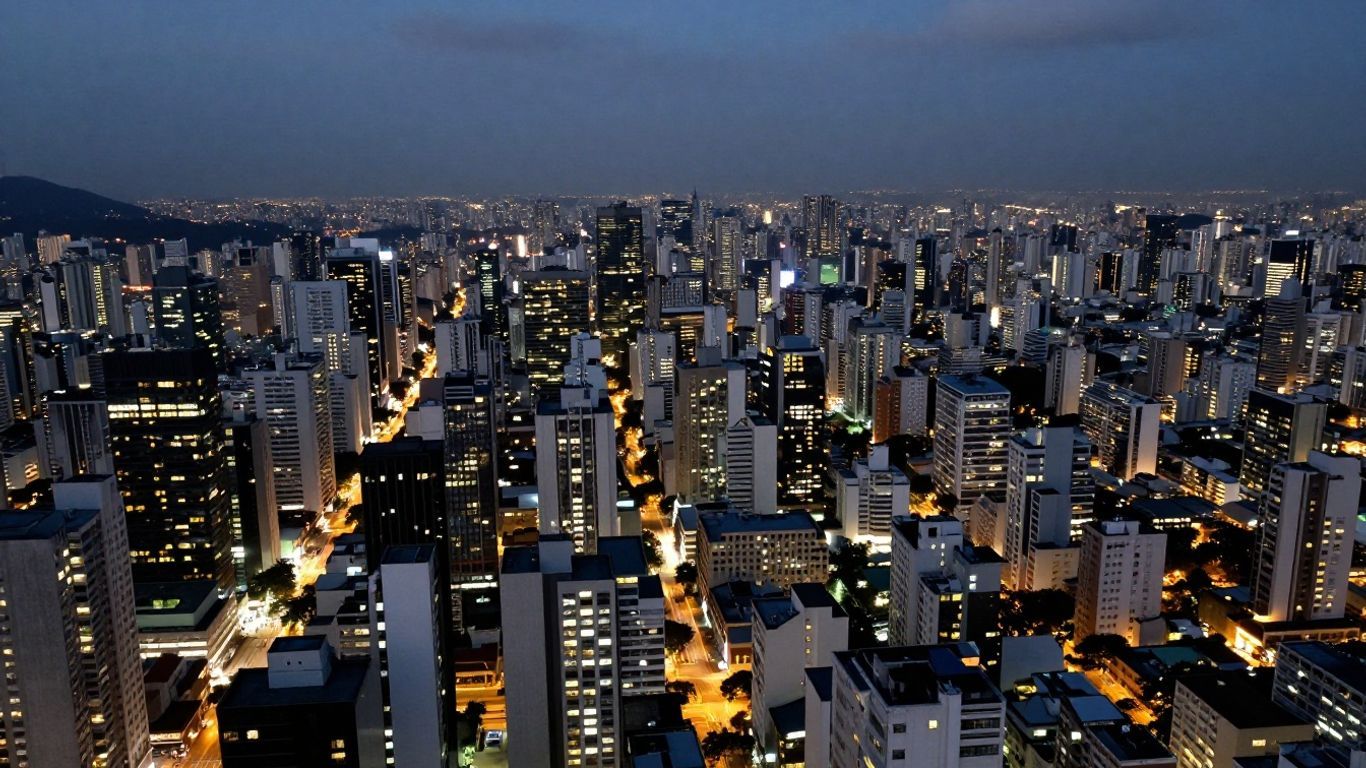
São Paulo, Brazil, is an immense urban center that notably distinguishes itself as the largest city in the world situated outside of Asia. It also proudly holds the title of the biggest Portuguese-speaking city globally. This South American giant functions as a vibrant melting pot of diverse cultures, believed to host some of the largest Japanese, Italian, and Arab diasporas anywhere on Earth.
Founded way back in 1554 by diligent Jesuit priests, the city was respectfully named in honor of Paul the Apostle. Its profound Latin motto, 'Non ducor, duco,' which elegantly translates to 'I am not led, I lead,' truly captures the forward-moving and assertive spirit of this bustling metropolis.
Here’s a concise overview of some key aspects of São Paulo:
- Population (Urban Area): Approximately 23.1 million people.
- Area (Urban Area): Around 3,649 square kilometers.
- Cultural Diversity: Renowned for its significant immigrant communities hailing from Italy, Japan, and various parts of the Middle East.
- Economic Hub: A pivotal financial and industrial center for both Brazil and the broader South American continent.
São Paulo's sheer scale ensures it is a city of perpetual motion and continuous development. Its profound influence extends far beyond its geographical borders, thereby establishing it as a significant and impactful player on the global stage.
9. Seoul
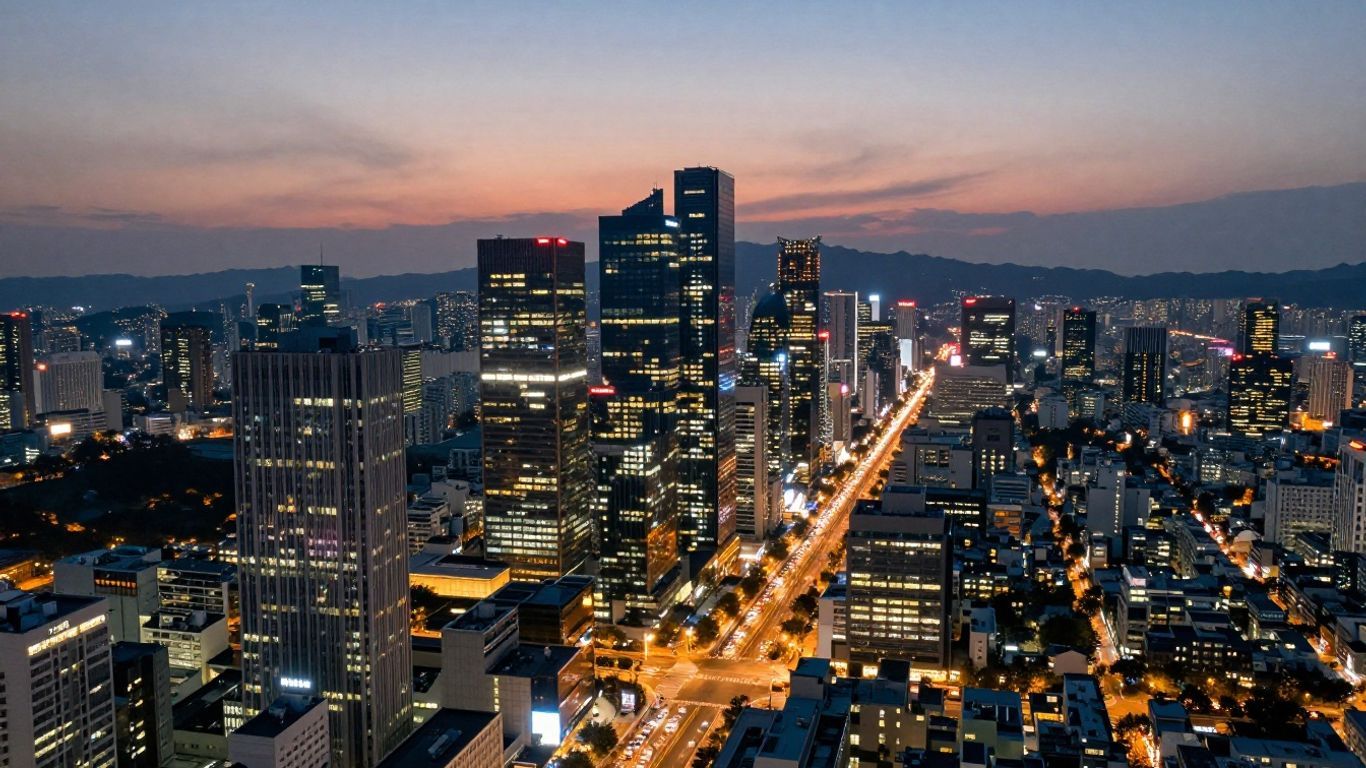
Seoul, the bustling capital of South Korea, is an immense urban center that consistently hums with activity. It is a captivating place where ancient palaces stand gracefully beside futuristic skyscrapers, showcasing a truly intriguing blend of historical heritage and modern innovation.
Seoul functions as a global hub for technology and culture, consistently influencing trends across the world. The city is renowned for its fast-paced lifestyle and its critical role in the global economy, particularly within the electronics and automotive industries.
Here’s a concise look at some key aspects of Seoul:
- Population (Urban Area): Approximately 25,000,000 (as of 2026 estimate)
- Area (Urban Area): Around 2,500 km²
- Key Industries: Electronics, automotive, semiconductors, K-pop and entertainment, fashion.
- Landmarks: Gyeongbokgung Palace, N Seoul Tower, Bukchon Hanok Village, Myeongdong shopping district.
Seoul's rapid development over the past several decades has profoundly transformed it into a modern metropolis. This remarkable growth has, predictably, brought forth both substantial opportunities and notable challenges, particularly in the meticulous management of its vast population and complex infrastructure.
The city's public transportation system is frequently lauded for its exceptional efficiency, rendering it relatively straightforward to navigate even with its immense population. From the timeless charm of its historic palaces to the vibrant energy of its contemporary districts, Seoul undeniably offers a truly unique urban experience.
10. Mexico City
Mexico City, frequently referred to by its modern moniker CDMX, is an enormous urban expanse situated within North America. It stands as one of the oldest capital cities in the Americas, with its foundational roots tracing back to the 1320s when it was first established by the Mexica people. Legend has it their god indicated the precise spot by revealing an eagle perched on a cactus, devouring a snake. Quite the compelling origin story, wouldn't you agree?
Once famously dubbed the "City of Palaces" many centuries ago, it remains an absolutely colossal city today. It also boasts a remarkably high elevation, situated at approximately 2,240 meters (7,350 feet) above sea level. This unique geographical positioning bestows upon it a distinct and often invigorating climate.
Here’s a succinct overview of its estimated population and geographical size:
| City | Estimated Urban Area Population | Area (km²) |
|---|---|---|
| Mexico City | 21,800,000 | 2,530 |
Mexico City is, fundamentally, a place rich in history and vibrant culture. It serves as a major center for dynamic business activity and proudly hosts a thriving arts scene. The city's intricate layout and diverse architecture powerfully reflect its extensive past, spanning from ancient civilizations to the modern era. It is truly a place that exemplifies how cities profoundly grow and transform over the passage of time.
The sheer scale of Mexico City means it functions as a central hub for an incredible array of distinct facets—from its world-renowned food and captivating music to its bustling business and thriving art scenes. It is, in essence, a city that is always in motion, perpetually evolving while steadfastly holding onto its deep, invaluable historical roots.
11. Kolkata
Kolkata, historically recognized as Calcutta, is a city that pulsates with an profound sense of history and vibrant culture. Located in eastern India, it is a place where the old and the new frequently converge in truly fascinating ways. Picture grand colonial architecture standing proudly alongside sleek modern high-rises, and bustling markets teeming with an astonishing array of goods, from exotic spices to cutting-edge electronics.
Kolkata stands as a major cultural and educational hub within India. It is justly celebrated for its rich literary scene, its vibrant artistic expressions, and its significant contributions to Indian cinema and theater. The city possesses a unique and palpable energy—a compelling blend of tradition and forward-thinking innovation that unfailingly draws people in.
Here are a few defining aspects that truly make Kolkata stand out:
- A Rich Literary and Artistic Heritage: Kolkata has long been regarded as the intellectual capital of India, boasting a distinguished history of nurturing and producing renowned writers, celebrated poets, and acclaimed artists.
- Architectural Marvels: From the majestic Victoria Memorial to the iconic Howrah Bridge, the city showcases a remarkably diverse range of architectural styles that eloquently narrate stories of its storied past.
- Culinary Delights: Bengali cuisine is globally renowned, and Kolkata proudly serves as its heartland. Prepare to savor exquisite sweets, intensely flavorful fish dishes, and an unrivaled street food scene that is genuinely hard to surpass.
The city's immense population density and its pivotal role as a major economic center collectively imply that life here can indeed be fast-paced. Yet, amidst this ceaseless hustle, there exists a powerful sense of community and a deep, abiding appreciation for the arts and intellectual pursuits that fundamentally define its distinctive character.
While precise population figures can fluctuate depending on the specific definition of its urban area, Kolkata consistently ranks among the world's largest cities. Its urban area is estimated to encompass approximately 15.3 million people as of 2026, solidifying its status as a significant player on the global stage.
12. New York City
New York City, affectionately known worldwide as the Big Apple, stands as the most populous city in the United States and an undeniable major global hub. Its rich history extends back to the 1620s when Dutch settlers established it as New Amsterdam, officially becoming New York in 1664. The modern city, as we know it today, was consolidated in 1898, bringing together its five distinctive boroughs: Manhattan, Brooklyn, Queens, Staten Island, and The Bronx.
New York City is not merely the most populous city in the U.S.; it also ranks among the most linguistically diverse places on Earth, with an astonishing estimated 800 languages spoken within its bustling limits.
Here’s a snapshot of its population figures, based on recent meticulous estimates:
| Area Name | State Name | 2024 Total Population | Numeric Increase (2023-2024) |
|---|---|---|---|
| New York city | New York | 8,478,072 | 87,184 |
This data underscores New York City's significant population and its consistent, continued growth. It is, and always has been, a powerful magnet for people from virtually every corner of the world, a constant influx contributing profoundly to its vibrant culture and dynamic atmosphere. From its instantly recognizable iconic skyline to its wonderfully diverse neighborhoods, New York City steadfastly remains a major center for global finance, unparalleled culture, and critical international affairs—notably hosting the headquarters of the United Nations.
The city's deep historical roots and continuous evolution have profoundly shaped it into a truly unique metropolis. Its remarkable development from a fledgling colonial settlement to an undisputed global powerhouse stands as a powerful testament to its enduring appeal and formidable economic strength.
13. Chongqing
Chongqing is, in many respects, a bit of an outlier when we discuss the world's largest cities. While numerous lists primarily focus on population density or the sheer number of inhabitants within a tightly concentrated urban core, Chongqing is frequently cited as the largest city globally by its sheer land area. Indeed, we're talking about a municipality that encompasses over 84,000 square kilometers—an expanse larger than some independent countries!
This monumental administrative area incorporates not only a dense, bustling urban center but also vast rural regions, majestic mountains, and meandering rivers. Therefore, when one encounters discussions about Chongqing's immense size, it's crucial to bear in mind that it isn't solely composed of skyscrapers and vibrant, bustling streets. Rather, it functions more akin to an entire province-sized city.
The sheer scale of Chongqing's administrative boundaries distinctively sets it apart among global megacities.
Here’s a concise look at how Chongqing’s area impressively compares:
| City | Country | Estimated Area (km²) |
|---|---|---|
| Chongqing | China | 84,400 |
| Harbin | China | 53,000 |
| Khartoum | Sudan | 22,100 |
The majority of its substantial population is concentrated within the urban core and its adjacent areas, fostering a dynamic synthesis of urban vitality and expansive agricultural landscapes all contained within a single administrative unit. It presents a truly fascinating example of how differing definitions can lead to vastly disparate rankings of city size.
The immensity of Chongqing's administrative region means it gracefully encompasses diverse geographical features, ranging from vibrant urban centers to tranquil rural farmlands and rugged mountainous terrain, thereby presenting a truly unique model of city governance and progressive development.
14. Chengdu
Chengdu, the distinguished capital of Sichuan province in China, stands as a major economic, cultural, and transportation hub within Western China. It is a city that remarkably blends ancient, profound history with dynamic modern development, establishing it as a truly fascinating destination to explore.
Chengdu is particularly celebrated for its distinctly relaxed pace of life and its undeniable status as the primary home of the beloved giant panda. This unique and appealing combination consistently attracts both visitors and long-term residents alike.
Here are a few defining aspects that make Chengdu truly stand out:
- Panda Breeding Research Base: This is an absolute must-visit for anyone with an interest in pandas. It functions as a crucial conservation center where you can observe giant pandas, adorable red pandas, and other fascinating animals within a thoughtfully naturalistic setting.
- Kuanzhai Alleys (Wide and Narrow Alleys): These historic streets offer a charming glimpse into traditional Sichuanese architecture and vibrant local culture. Here, one can discover serene tea houses, sample delicious local snacks, and browse unique artisan shops.
- Wuhou Shrine: This impressive temple complex is respectfully dedicated to Liu Bei, a formidable warlord from the ancient Three Kingdoms period, and his brilliant chancellor Zhuge Liang. It holds immense significance as a historical and cultural site.
- Jinli Ancient Street: Conveniently located adjacent to Wuhou Shrine, this vibrant street buzzes with traditional crafts, enticing local food stalls, and inviting teahouses, collectively offering a lively and authentic atmosphere.
Chengdu's culinary scene is, moreover, world-renowned, especially its famously spicy Sichuan cuisine. Iconic dishes such as Mapo Tofu and Kung Pao Chicken originated right here, and embarking on an exploration of the local food markets is an adventure in itself.
The city's rapid growth has profoundly transformed its skyline with striking modern architecture, yet it has commendably managed to preserve many of its invaluable historical and cultural treasures. This delicate and successful balance is truly key to Chengdu's widespread appeal as a major global city.
With an estimated urban population of around 21,000,000 by 2026, Chengdu steadfastly continues to be a significant player in China's ongoing development and a truly unique destination on the world stage.
15. Cairo
Cairo, the illustrious capital of Egypt, stands as a monumental city on the African continent and a significant global population center. It’s a compelling place where ancient, profound history gracefully converges with vibrant modern life, with the iconic pyramids of Giza resting almost on its very doorstep. This sprawling metropolis functions as a pivotal hub of culture, commerce, and government for Egypt and the broader Middle East and North Africa region.
Cairo's population is estimated to reach approximately 20.3 million people by 2026, firmly establishing it as one of the largest urban areas worldwide. The city's growth has been notably rapid, primarily driven by both internal migration from rural areas and a consistently high birth rate. This swift expansion presents both considerable opportunities and intricate challenges for comprehensive urban planning and essential infrastructure development.
Here are a few key aspects that characterize Cairo’s dynamic urban landscape:
- Historical Significance: Home to ancient wonders and a remarkably rich Islamic heritage, Cairo is a city deeply steeped in millennia of history.
- Economic Engine: It serves as Egypt's primary economic and financial center, consistently attracting businesses and diverse talent.
- Cultural Melting Pot: Cairo presents a vibrant fusion of traditional Egyptian culture and compelling modern influences, vividly reflected in its art, music, and daily life.
- Transportation Hub: The city functions as a major transportation nexus for air, road, and rail travel, both within Egypt and on an international scale.
The sheer magnitude of Cairo dictates that daily life for its millions of residents invariably involves constant movement and continuous adaptation. Navigating its busy, often chaotic streets and endeavoring to comprehend its complex social fabric offers a profound glimpse into the fundamental dynamics of a truly massive urban environment.
Cairo's ongoing development continues to represent a delicate balancing act between meticulously preserving its immense historical legacy and thoughtfully accommodating the pressing needs of a growing, modern population. It steadfastly remains a city of immense importance, both regionally and globally.
16. Dhaka
Dhaka, the bustling capital of Bangladesh, is a megacity that continues to expand at a truly rapid pace. It’s a place where history meets the present moment, boasting a vibrant culture and a population that firmly establishes it as one of the largest urban centers globally. The sheer density of people living here is, quite frankly, astounding, making it a unique and compelling study in contemporary urban living.
Dhaka’s story is fundamentally one of constant, dynamic evolution. From its early beginnings as a significant trading post, it has transformed into a sprawling and incredibly active metropolis. The city’s infrastructure is in a perpetual state of adaptation, striving to accommodate its ever-increasing population—a process that presents both formidable challenges and notable opportunities for its residents and dedicated urban planners.
Here are a few key aspects that define Dhaka:
- Population Density: Dhaka is widely recognized for being one of the most densely populated cities on the planet. This extraordinary concentration of people profoundly shapes daily life, influencing everything from intricate transportation networks to available housing.
- Economic Hub: It serves as the primary economic and administrative center of Bangladesh, consistently attracting individuals from across the entire country in search of employment and diverse opportunities.
- Cultural Richness: Despite its rapid and extensive urbanization, Dhaka admirably retains a rich and vibrant cultural heritage, vividly evident in its celebratory festivals, distinctive cuisine, and traditional arts.
The swift growth of Dhaka powerfully highlights the pervasive global trend of urbanization, where cities emerge as undeniable centers of opportunity but simultaneously contend with significant pressures on vital resources and essential infrastructure. Gaining an understanding of Dhaka's development offers invaluable insights into the complex dynamics of large, rapidly expanding urban areas worldwide.
As of 2026, Dhaka's estimated urban population firmly places it among the world's largest cities, a testament to its enduring significance and undeniably dynamic nature.
17. Beijing
Beijing, the distinguished capital of China, is a city that vividly illustrates just how profoundly things can transform over time. It is a place with an incredible history stretching back approximately 250,000 years, yet today it stands as a major global center for a diverse array of fields, including education, transportation, and cutting-edge science. The name itself, 'Northern Capital,' subtly hints at its historical significance, distinguishing it from Nanjing, the 'Southern Capital,' as far back as the 15th century.
It's quite remarkable, isn't it, to consider that this modern megacity was once merely an ancient imperial capital? One can still discern tangible remnants of that storied past, such as the majestic Temple of Heaven and preserved sections of the Great Wall, coexisting seamlessly alongside gleaming, ultra-modern buildings. It’s a city that skillfully balances its deep historical roots with a decidedly forward-looking, innovative approach.
Here’s a concise overview of some key aspects of Beijing:
- Historical Significance: Proudly home to imperial palaces and venerable ancient structures that narrate centuries of history.
- Modern Hub: A recognized leader in global finance, advanced technology, and impactful research.
- Cultural Blend: Presents a fascinating fusion of traditional alleyways (known as hutongs) and contemporary, dynamic urban life.
- Transportation: Features an extensive and highly efficient subway system, complemented by major international airports.
Beijing's profound transformation from an ancient capital to a state-of-the-art megacity is truly remarkable and warrants considerable attention. It is a city that continues to grow and evolve, making it an especially fascinating place to observe the intricate processes of urban development.
The city's development consistently showcases a strong and strategic focus on infrastructure and innovation, purposefully aimed at supporting its massive population and solidifying its crucial role as a global economic player.
18. Bangkok
Bangkok, the incredibly vibrant capital of Thailand, stands as a major global hub and consistently ranks among the world's most visited cities. It’s a captivating place where ancient traditions gracefully meet modern life head-on, thereby crafting a truly unique and unforgettable urban experience.
The city’s estimated urban population hovers around 18 million people, firmly establishing it as a significant and influential player in the global urban landscape.
Bangkok's development has been exceptionally rapid, successfully transforming it into a bustling center for commerce, rich culture, and thriving tourism. Its strategic geographical location in Southeast Asia has perpetually ensured its importance as a pivotal point for regional trade and international interaction.
Here are a few key aspects that define Bangkok:
- Economic Powerhouse: Bangkok serves as the undeniable economic heart of Thailand, driving much of the nation's growth through its robust finance, diverse industry, and extensive services sectors.
- Cultural Melting Pot: The city presents a compelling blend of traditional Thai culture and pervasive international influences, vividly evident in its celebrated cuisine, dynamic art scene, and everyday life.
- Transportation Hub: It functions as a major gateway to Southeast Asia, boasting a large, modern international airport and extensive public transport systems, including the popular BTS Skytrain and MRT subway.
The sheer energy of Bangkok is truly palpable. From its serene, gilded temples to its wonderfully chaotic street markets, the city offers a sensory experience quite unlike any other. It’s a place that is perpetually evolving, yet admirably holds onto its rich and distinctive heritage.
Navigating Bangkok can, indeed, be an adventure in itself. While the public transport system is generally quite efficient, the city’s notoriously heavy traffic can sometimes make getting around a genuine challenge. However, the city’s dynamic spirit and the inherent warmth of its people unfailingly make it a truly memorable destination.
19. Shenzhen
Shenzhen, a city that was virtually unknown to most people just a few decades ago, has spectacularly exploded into one of the world's major urban centers. Located in Guangdong Province, China, and situated right next to the vibrant metropolis of Hong Kong, it serves as a prime and striking example of rapid, transformative development.
This remarkable city has, in an incredibly short span of time, morphed from a modest fishing village into a global technology and manufacturing powerhouse.
Here’s a concise overview of Shenzhen's astonishing growth trajectory:
- Founding: Officially established as a Special Economic Zone in 1980, marking the beginning of its meteoric rise.
- Population: Estimated to reach approximately 17.6 million people by 2026, reflecting its continuous appeal.
- Economy: Widely recognized as China's Silicon Valley, it functions as a critical hub for electronics, telecommunications, and high-tech industries.
Shenzhen's extraordinary development is frequently lauded as a model for successful economic reform and strategic opening-up within China. Its advantageous strategic location and proactive government policies have demonstrably attracted massive investment and an influx of top talent, directly contributing to its meteoric rise on the global stage.
It's genuinely wild to contemplate just how much has changed there. The city's skyline is now dominated by an impressive array of modern skyscrapers, and it plays a major, indispensable role in international trade and innovation. Shenzhen truly exemplifies what can be achieved when a region intently focuses its efforts on aggressive growth and comprehensive development.
20. Moscow
Moscow, the distinguished capital of Russia, stands as a significant global metropolis and proudly holds the title of the largest city in Europe. It’s a captivating place where centuries of history gracefully converge with vibrant modernity, evident in its ancient kremlins and majestic cathedrals standing alongside contemporary skyscrapers and bustling commercial centers.
The city's population is estimated to be around 17.3 million people by 2026, solidifying its position as one of the world's most populous urban areas.
Moscow's profound influence extends far beyond its geographical borders. It functions as a major political, economic, cultural, and scientific hub for Russia and the broader Eastern European region. The city is a crucial transportation nexus, boasting an extensive metro system that is not only remarkably efficient but also, in itself, a work of art, featuring ornate, architecturally stunning stations that are major attractions in their own right.
Here are a few key aspects that define Moscow:
- Historical Significance: Proudly home to the iconic Red Square and the formidable Kremlin, which have served as centers of Russian power and history for many centuries.
- Cultural Hub: Boasts numerous world-class museums, acclaimed theaters (such as the illustrious Bolshoi), and renowned art galleries.
- Economic Powerhouse: Functions as a leading center for finance, diverse industry, and robust business activities within Russia.
- Architectural Diversity: Features a compelling mix of opulent imperial palaces, monumental Soviet-era structures, and impressive modern architectural marvels.
Moscow's intricate development has been profoundly shaped by centuries of compelling history, from its origins as a medieval principality to its pivotal role as the capital of the Russian Empire, then the Soviet Union, and now the Russian Federation. This long and remarkably complex past is vividly discernible in its diverse urban landscape and immensely rich cultural heritage.
Looking Ahead: The Ever-Evolving Urban Landscape
So, we've embarked on a fascinating journey, taking a comprehensive look at some of the biggest cities on the planet as projected for 2026. It truly is remarkable, isn't it, to consider the sheer multitude of people concentrated within these immense urban environments? These colossal urban areas are far more than just collections of buildings and intricate street networks; they are vibrant centers of culture, thriving commerce, and the fertile ground where new ideas constantly germinate. As more individuals migrate to cities in pursuit of enhanced opportunities, these places continue their ceaseless transformation. What becomes strikingly clear is that the definitive list of the world's largest cities is never static. It is, by its very nature, always shifting—a dynamic reflection of global population movements and the relentless growth of economies. Comprehending these overarching trends helps us to better discern the direction in which the world is collectively heading, one bustling city at a time.
Frequently Asked Questions
What makes a city one of the "largest" in the world?
Cities are primarily categorized as "large" based on their population—specifically, the number of people who reside within them. Occasionally, experts also consider the geographical area a city encompasses or the volume of economic and social activity it generates. However, the prevailing measure almost always revolves around the total population living within the city's broader metropolitan or urban area.
Why do so many people live in big cities?
People are drawn to large cities for a myriad of reasons. Typically, these urban centers offer a greater abundance of job opportunities, access to superior educational institutions, and a wider array of cultural and recreational activities. Cities often act as powerful magnets, attracting individuals with the promise of enhanced quality of life and increased chances for personal and professional advancement.
Has the biggest city in the world always been the same?
No, the city recognized as the largest globally has, in fact, changed considerably over time. Historically, cities like London and New York once held this distinction. Currently, Tokyo is frequently regarded as the largest. This evolution clearly demonstrates how population distributions shift and how different cities experience varying rates and patterns of growth.
Are the biggest cities always the best places to live?
Not necessarily. While major cities undoubtedly offer numerous advantages, they can also present challenges such as overcrowding and high costs of living. Conversely, some cities are celebrated for their exceptional livability, primarily due to factors like superior safety, efficient transportation infrastructure, and excellent healthcare services. Ultimately, what constitutes the "best" place to live largely depends on individual priorities and preferences.
How do we know the population numbers for these huge cities?
These population figures are generally estimates, derived from sophisticated models and informed projections. Experts diligently collect demographic data and conduct censuses within defined urban areas, though this process can be complex given the continuous growth and dynamic nature of cities. Furthermore, variations in how "urban area" is precisely delineated can lead to differing numerical interpretations.
What are some challenges that big cities face?
With such immense populations, large cities must contend with a multitude of challenges. They require robust infrastructure—efficient road networks, comprehensive public transport, and sufficient housing for all residents. Maintaining environmental quality, such as clean air, and ensuring equitable access to essential resources also become increasingly complex endeavors, particularly in cities experiencing rapid growth.


