


resources
Unveiling the 3 Biggest States in USA: Size, Rank, and Key Facts
10 Apr 2026

When one considers the United States, it’s quite easy to conjure images of sprawling metropolises and endless highways. But have you ever truly paused to contemplate the sheer acreage these states encompass? We're delving into the three largest states by land area in the USA, and rest assured, their scale is nothing short of immense. Gaining a perspective on their vastness and what that signifies for the nation's diverse landscape is truly fascinating—perhaps even a little wild. Let's embark on a journey to explore these geographic titans.
Key Takeaways
- Alaska stands as the undisputed largest state in the U.S., by an extraordinary margin.
- Texas secures the second-largest position, a colossal territory famed for its varied topographies.
- Montana claims the third spot, renowned for its expansive open spaces and its iconic "Big Sky Country."
- These three states alone account for a substantial portion of the overall U.S. landmass.
- A firm grasp of these states' sizes offers a more complete understanding of America's intricate geography.
1. Alaska
Upon reflecting on the sheer magnitude of the United States, Alaska invariably commands attention. It's not merely large; it's absolutely colossal, holding the top position by an astonishing margin. Can you imagine a place so immense that it covers more ground than the next two largest states combined? That, indeed, is Alaska for you—stretching across a mind-boggling 570,640.95 square miles. It's quite challenging to visualize such an expansive territory, but it means you'll encounter everything from majestic mountains and untamed coastlines to vast, unspoiled wilderness.
Alaska's immense scale naturally leads to incredibly diverse geography and climates. For instance, you can discover lush, temperate rainforests in the southeastern Panhandle, while the northern regions host the stark, arctic tundra. This remarkable variety is a significant factor in what makes the state so unique and breathtaking, supporting an extensive range of wildlife.
Here are a few essential facts that help contextualize its formidable size:
- Land Area: 570,640.95 square miles (1,477,953.3 km²)
- Coastline: Exceeds 33,000 miles, which is actually more than all other U.S. states combined.
- Time Zones: Spans three distinct time zones.
- Highest Point: Denali, North America's tallest peak, reaching an impressive 20,310 feet.
While the majority of Alaska's population resides in the southern part of the state, with Anchorage serving as its largest city, the interior and northern areas remain exceedingly sparsely populated. This offers unparalleled opportunities for anyone seeking remote landscapes and truly authentic outdoor adventures.
The sheer vastness of Alaska truly provides a unique experience, from its dramatic mountain ranges and extensive coastlines to its icy glaciers and active volcanoes—particularly those found within the Aleutian Islands. It is, undeniably, a land where nature reigns supreme.
2. Texas
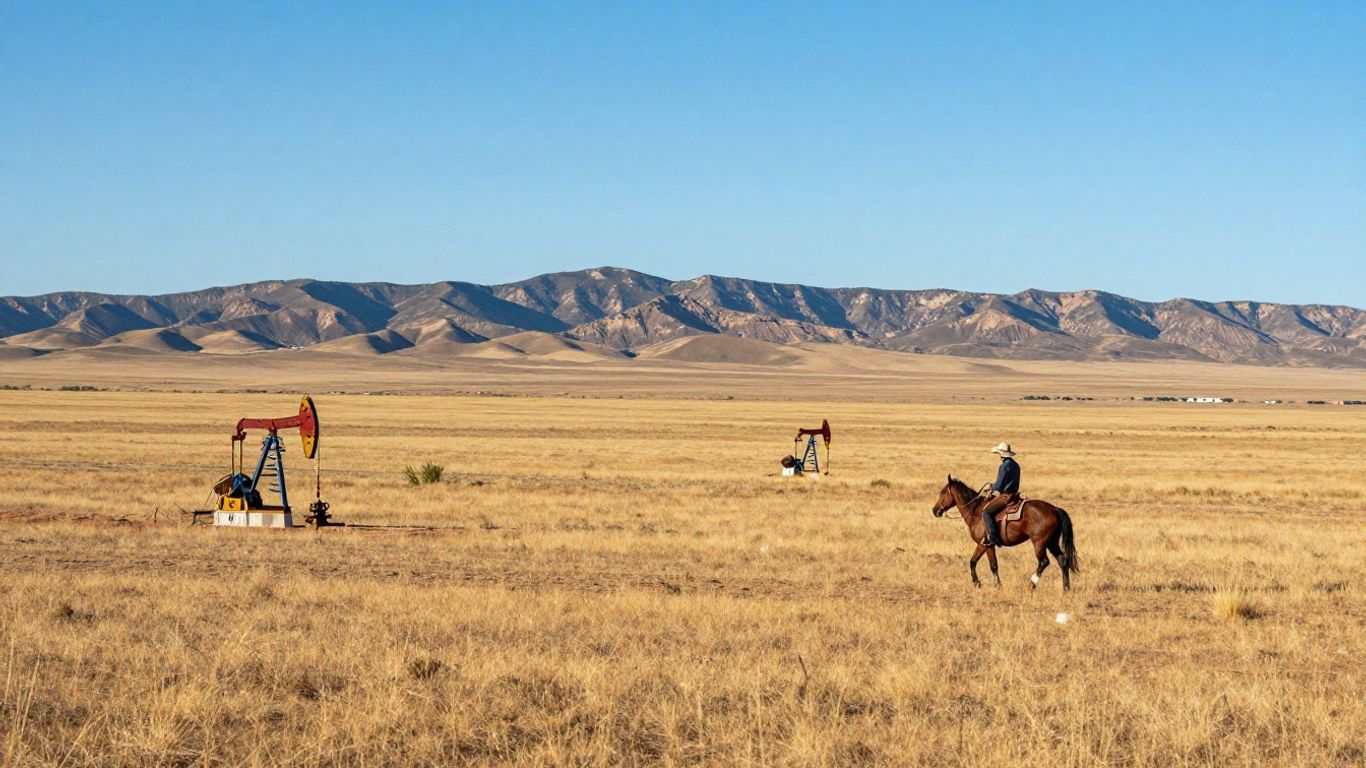
Claiming the title as the second-largest state in the U.S. by land area, Texas sprawls across a monumental 268,596 square miles. It's a place steeped in rich history and characterized by even more expansive open spaces. While many might immediately envision cowboys and oil rigs—which are certainly integral to its identity—Texas also stands as a formidable force in numerous other sectors. Its sheer size means it boasts remarkably diverse geography, extending from the dense piney woods in the east all the way to the arid desert landscapes in the west.
Texas's singular history includes a period as an independent republic before its annexation into the United States in 1845—a pivotal chapter that profoundly shaped its distinctive culture and identity. The annexation of Texas marked a significant event in U.S. history, with the state's expansion being notably influenced by occurrences such as the Mexican-American War.
Here are some salient facts about the iconic Lone Star State:
- Size: 268,596 square miles (695,662 square kilometers)
- Rank: Second largest state by land area
- Nickname: The Lone Star State
- Bordering States: Oklahoma, Arkansas, Louisiana, and New Mexico
Texas is far from being merely flat plains; its geography is, in fact, surprisingly varied. One can discover:
- Gulf Coast: Featuring extensive stretches of beaches and bayous.
- East Texas: Widely recognized for its dense pine forests.
- Central Texas: Defined by rolling hills and home to the state capital, Austin.
- West Texas: Characterized by arid deserts and the majestic Guadalupe Mountains.
- The Panhandle: High plains that extend toward Oklahoma.
Traversing Texas can honestly feel akin to crossing multiple states due to its truly immense scale. It offers everything from bustling major cities like Houston and Dallas to vast ranches and rugged coastlines along the Gulf of Mexico. It genuinely encapsulates the adage that 'everything's bigger in Texas.'
3. Montana
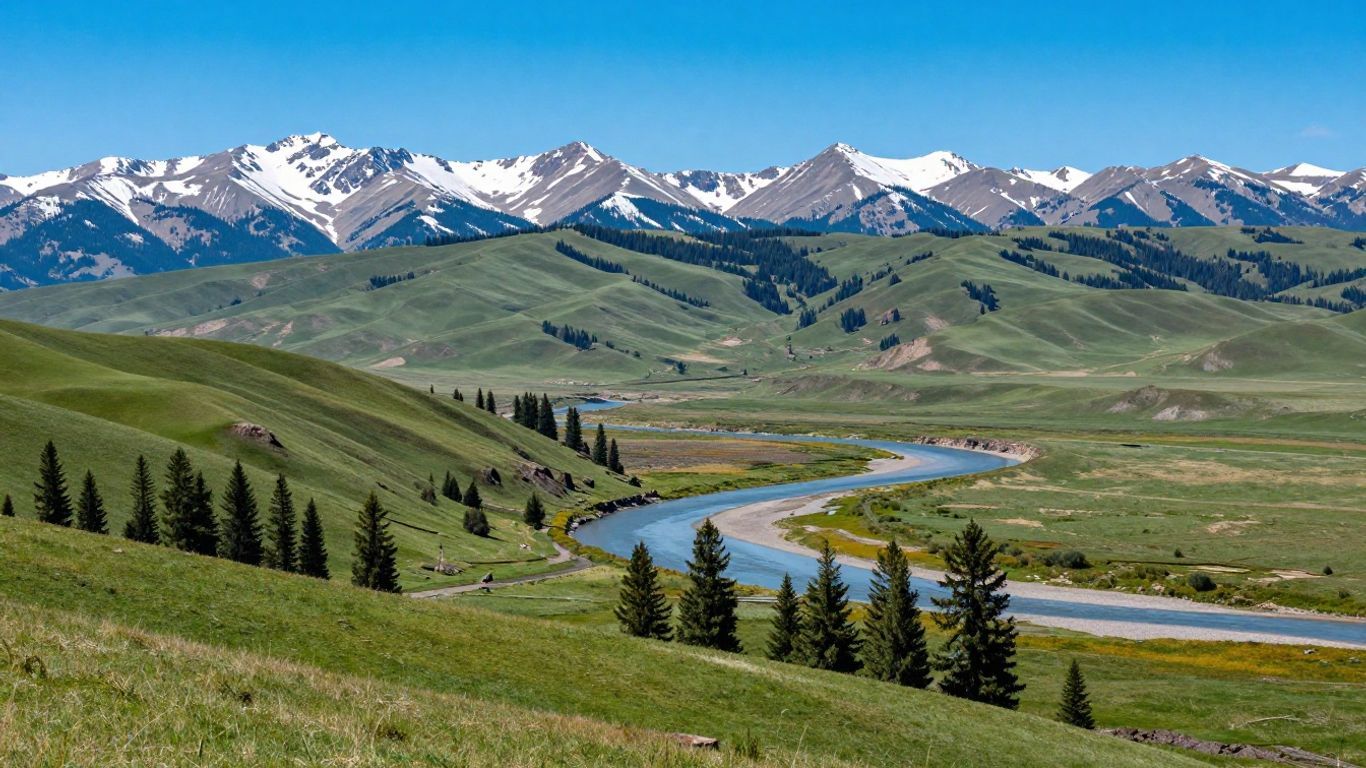
Montana, often affectionately dubbed "Big Sky Country," is a state that unequivocally lives up to its evocative nickname. It registers as the fourth largest state in the U.S. by land area, encompassing a formidable 145,545.80 square miles. That, for sure, constitutes an extraordinary amount of wide-open space!
This immense scale translates into incredibly diverse landscapes, ranging from the rugged, towering peaks of the Rocky Mountains in the west to the gently rolling plains that stretch eastward. It's truly a place where the majesty of nature commands center stage.
Geography and Landscape
Montana’s geography is prominently shaped by its mountains and plains. The western portion of the state is an integral part of the Rocky Mountains, featuring stunning national parks like Glacier National Park and regions celebrated for their dramatic scenery and abundant outdoor activities. As one progresses eastward, the terrain gracefully transitions into the Great Plains, characterized by expansive grasslands and a more arid climate. This striking contrast renders Montana a visually captivating state.
Population Density
Given its enormous size, it's perhaps no surprise that Montana boasts one of the lowest population densities in the United States. With a population of approximately 1.1 million people dispersed across its vast territory, one can easily envision the sheer amount of room available to roam. The average population density hovers around 7 people per square mile, which vividly underscores the state’s predominantly rural character and its ample open land. This low density significantly contributes to its reputation for solitude and unspoiled natural beauty.
Key Facts
- Total Area: 145,545.80 sq mi (376,961.9 km²)
- Population (approximate): 1,084,225
- Population Density: 7/sq mi (3/km²)
- Major Mountain Ranges: Rocky Mountains
- Eastern Terrain: Great Plains
Montana's sheer size implies that simply getting from one side of the state to the other can indeed be quite an undertaking—a considerable journey. It’s undeniably a place that encourages deep exploration and a profound appreciation for the immense scale of the American West. And yes, you'll certainly find some excellent beef here, much of it raised on those very wide-open ranches.
Wrapping Up Our Look at the Giants
So, we've now journeyed through the astounding scale of the United States, meticulously focusing on its three largest states. It's quite remarkable to ponder just how much land Alaska, Texas, and Montana truly encompass, isn't it? These regions aren't merely large; they are vast expanses graced with diverse landscapes that truly showcase the incredible variety found across the entire country. A better understanding of their individual sizes certainly offers a more complete picture of American geography. Perhaps this exploration has sparked your curiosity about these enormous states, or perhaps it's simply fostered a renewed appreciation for maps. Either way, it serves as an excellent reminder of the incredible scale of the nation we call home.
Frequently Asked Questions
What makes Alaska the largest state?
Alaska holds the distinction of being the largest state in the U.S. by a considerable margin! It boasts a truly massive land area, which is more than double the size of Texas. Its immense size is attributed to its expansive, wild geography and its historical acquisition from Russia.
Why is Texas the second-largest state?
Texas proudly stands as the second-largest state, covering a tremendous amount of territory. It's widely recognized for its vast open spaces, its diverse geography—ranging from dense forests to arid deserts—and its significant historical importance.
What is Montana known for?
Montana, the third-largest state, is famously known as "Big Sky Country." It's celebrated for its immense, open spaces, majestic mountains, and breathtaking natural scenery. Despite its vast land area, it maintains a low population density, offering abundant opportunities for exploration and solitude.
Are the biggest states mostly in the West?
Indeed, a majority of the largest states are situated in the western part of the U.S. States such as Montana, Colorado, New Mexico, and Arizona are all exceptionally large and feature extensive tracts of open land.
Does a state's size mean it has more people?
Not necessarily! Alaska, for instance, is the largest state yet has a relatively small population. Conversely, California ranks among the larger states but is also the most populous. Therefore, geographical size and population density don't always directly correlate.
How does water affect a state's size?
Occasionally, significant water areas—such as portions of the Great Lakes—are included when calculating a state's total size. Michigan, for example, is considered one of the largest states partly due to the substantial amount of water encompassed within its borders.


