
resources
Unveiling the Latest US Cities Population Data for 2026
10 Apr 2026

The latest figures pertaining to U.S. city populations have been released, and they offer intriguing insights into which urban centers are expanding and which are not. The U.S. Census Bureau recently released its latest estimates, providing a revealing look at demographic shifts across the country. These figures illuminate where people are choosing to relocate, the motivations behind such moves, and the broader implications. Indeed, the narrative extends beyond solely the largest metropolitan areas; emerging centers are increasingly capturing attention. But what exactly do these U.S. city population figures truly signify?
Key Takeaways
- The most recent U.S. city population figures come from the U.S. Census Bureau's 2024 estimates, which are the prevailing official figures.
- Crucially, it's vital to recall that city population counts pertain strictly to the area within official city limits, not the entire surrounding metropolitan area. This distinction can lead to rankings appearing somewhat different than one might anticipate.
- Significant migratory flows are observed towards cities in the South and West. Meanwhile, some older cities in the Northeast and Midwest are experiencing population plateaus or modest declines.
- Currently, more than thirty U.S. cities boast populations exceeding one million residents, and New York City retains its preeminent position as the most populous.
- Intriguingly, a city's extensive land area doesn't always correlate with its population density, underscoring how our perception of 'size' can hinge on the metric employed—be it sheer population or geographical expanse.
Understanding the Sources of US Cities Population Data
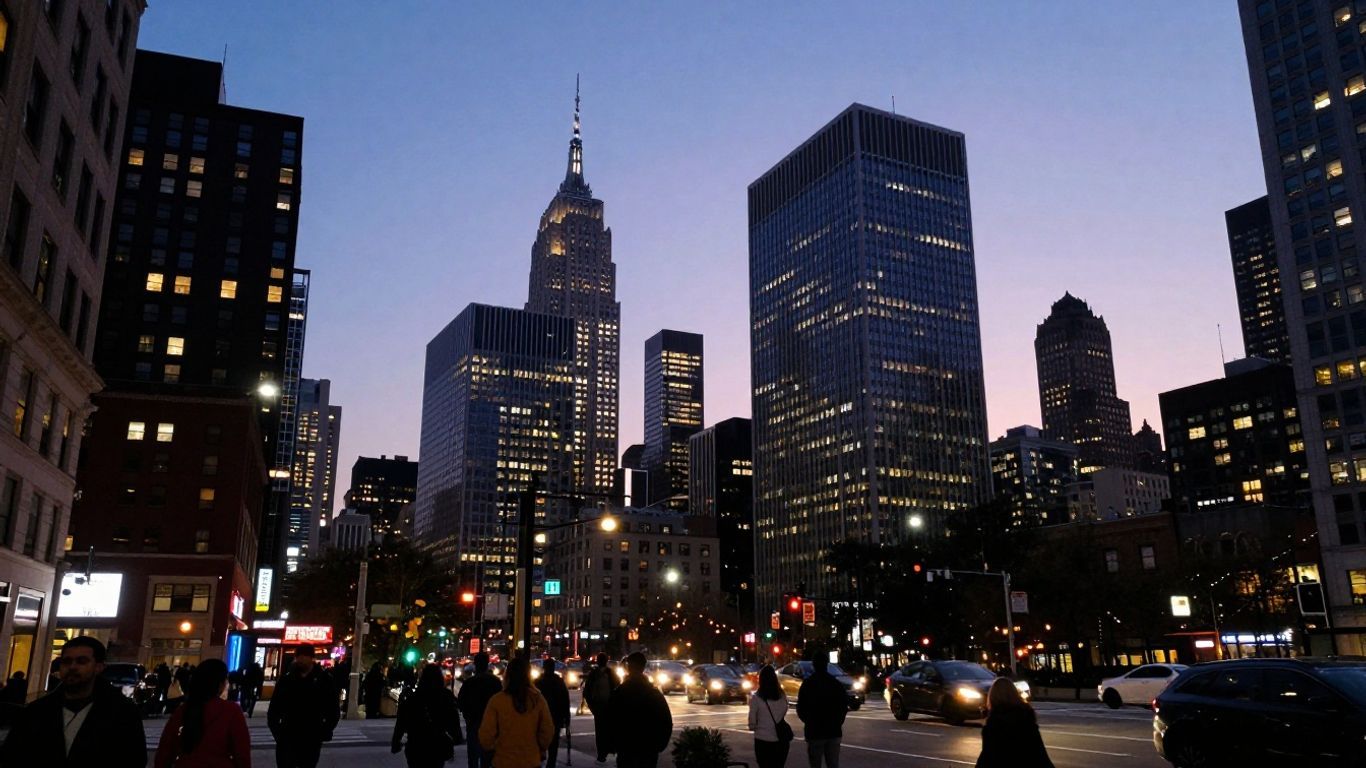
When examining the most recent population figures for U.S. cities, one naturally ponders the provenance of such data. These aren't merely arbitrary figures conjured from thin air, after all. Understanding the data's origin is rather crucial for a comprehensive understanding. The U.S. Census Bureau is the principal authority here, providing the official figures we rely on. Yet, how precisely are these numbers derived, and what specific demographic aspects do they encompass?
How Census Bureau Estimates Are Calculated
The Census Bureau employs a dual approach to monitor who resides where. Primarily, the cornerstone is the Decennial Census. This monumental undertaking occurs every ten years, representing a massive effort to count every single person in the country. Consider it the foundational dataset for all subsequent population figures.
In the years between those major enumerations, the Bureau doesn't merely rest on its laurels. Instead, it issues annual "Vintage" estimates—such as Vintage 2024, for example. These are updated figures that endeavor to capture:
- Births and Deaths: The natural changes in population.
- Migration: People moving into and out of areas, both from other countries and within the U.S.
To make these estimates, they leverage a diverse array of data sources. This can include things like tax records, proprietary surveys, and projections concerning international immigration. Indeed, it's a meticulously detailed process designed to maintain the utmost currency of these figures—an essential task between the official ten-year enumerations.
Differences Between City Proper and Metropolitan Area Data
Herein lies a potential point of confusion, and a frequent source of misinterpretation. When you encounter a city's population number, it becomes paramount to ascertain whether the reference is to the "city proper" or the "metropolitan area."
- City Proper: This refers to the population living strictly within the official administrative boundaries of a city. It is the population of the city as defined by its legal limits.
- Metropolitan Area: This is a much broader concept. It includes the central city plus its surrounding suburbs and economically linked areas. People who commute into the city for work are often included in this count.
These two definitions can yield profoundly disparate figures. A city might have a smaller "city proper" population but be an integral component of a sprawling metropolitan area housing millions of residents. One might liken it to comparing the inhabitants of a single dwelling to those of an entire neighborhood.
The way a city's boundaries are drawn can dramatically alter its reported population metrics. Some cities are compact, while others spread out over large areas, influencing our perception of 'size'—whether through a lens of population density or sheer geographical footprint.
Impact of Migration and Methodological Changes
Population figures are anything but static; indeed, they are in a constant state of flux. Migration patterns exert a significant influence on this. A discernible migration trend is evident towards the Sun Belt states and other areas in the South and West, propelled by factors such as robust job growth and a more favorable cost of living. Consequently, some urban centers are experiencing significant booms, while others may be navigating periods of decelerated growth or even population contraction.
Methodological changes by the Census Bureau can also introduce variability into the reported figures. Although the Bureau strives for methodological consistency, revisions to data collection and processing methodologies can necessitate adjustments in the estimates. This ongoing endeavor seeks to accurately mirror the genuine demographic shifts unfolding nationwide. These trends—more than mere statistics—underscore profound evolutions in residential and professional preferences across the nation.
Key Trends Shaping Urban Population Growth
Examining the forthcoming population projections for 2026, it becomes evident that the American urban landscape remains in perpetual flux. A confluence of significant shifts is simultaneously reshaping where people live and their underlying motivations.
Sun Belt Expansion and Economic Drivers
Undoubtedly, the most prominent continuing trend is the compelling allure of cities in the South and West, colloquially known as the Sun Belt. Places like Texas and Florida are witnessing substantial influxes of new residents. What accounts for this demographic shift? A multifaceted interplay of factors is at play. Initially, many of these regions present a comparatively lower cost of living than their older, established counterparts in the Northeast. Consider, for instance, housing prices—often more amenable, thereby facilitating easier establishment for families and individuals. Moreover, the clement weather serves as a considerable enticement for many. Yet, the appeal extends beyond mere affordability and agreeable climate. These regions have also been experiencing robust job creation, particularly within burgeoning sectors such as technology, healthcare, and logistics. This dynamic employment growth functions as a potent magnet, drawing individuals seeking fresh career prospects.
Rise of New Population Centers
The growth isn't exclusively confined to the largest Sun Belt metropolises, however. Indeed, smaller and mid-sized cities, sometimes even beyond the conventional Sun Belt geography, are emerging as increasingly desirable locales. States like North Carolina, with cities such as Raleigh and Charlotte, are transforming into genuine epicenters of growth. These locations frequently strike an optimal balance: they offer promising employment opportunities, a manageable cost of living, and a quality of life that resonates with individuals who might previously have exclusively targeted major metropolises. This diversification of growth signifies a broader dispersal of opportunities nationwide, moving beyond a mere concentration in a select few prominent areas.
Factors Influencing Internal Migration
What, then, are the fundamental impetuses propelling internal migration within the U.S.? A multiplicity of factors is demonstrably at work. The ascendancy of remote work, for instance, has proven to be a transformative force—a veritable game-changer. With more flexibility, individuals are no longer inextricably linked to proximate office locations. This newfound flexibility empowers them to explore locales potentially offering an enhanced lifestyle or greater economic affordability. Moreover, the prohibitive living expenses prevalent in some of the nation's most iconic cities are compelling residents to seek alternatives. When rental costs and daily expenditures reach unsustainable levels, individuals invariably begin to explore alternative residential prospects.
The combination of economic opportunity, affordability, and lifestyle preferences is reshaping where Americans choose to live. This internal migration is a powerful force, influencing everything from local economies to housing markets across the country.
Here's a quick look at some of the key drivers:
- Economic Opportunity: Strong job markets and diverse industries are a primary draw.
- Affordability: Lower housing costs and a more manageable cost of living are significant factors.
- Lifestyle and Quality of Life: Factors like climate, access to outdoor activities, and community feel play a role.
- Remote Work Flexibility: The ability to work from anywhere opens up new residential possibilities.
These observable trends collectively illustrate a dynamic demographic redistribution, wherein individuals are actively seeking environments that optimally align with their financial imperatives and personal predilections.
Ranking the Largest US Cities by Population in 2026
Understanding where people are choosing to live offers a revealing perspective on the evolving national landscape. Each city, irrespective of its scale, narrates a distinct tale of growth and contemporary societal shifts across America. We shall now examine the principal contenders and the broader narrative concerning our most populous urban centers.
Profiles of the Top Ten Most Populous Cities
According to the most recent 2024 estimates released by the U.S. Census Bureau, the following cities represent those with the largest populations strictly within their official municipal boundaries. While these figures provide a current snapshot, they are, of course, subject to future revisions.
| Rank | City | State | 2024 Population Estimate |
|---|---|---|---|
| 1 | New York | New York | 8,478,072 |
| 2 | Los Angeles | California | 3,878,704 |
| 3 | Chicago | Illinois | 2,721,308 |
| 4 | Houston | Texas | 2,390,125 |
| 5 | Phoenix | Arizona | 1,673,164 |
| 6 | Philadelphia | Pennsylvania | 1,573,916 |
| 7 | San Antonio | Texas | 1,526,656 |
| 8 | San Diego | California | 1,404,452 |
| 9 | Dallas | Texas | 1,326,087 |
| 10 | Jacksonville | Florida | 1,009,833 |
New York City unequivocally occupies a singular position, boasting a population more than double that of the subsequent largest city. It stands as a preeminent global hub for commerce, culture, and a magnet for diverse populations worldwide.
Milestone Cities Surpassing One Million Residents
Attaining the one million resident threshold represents a notable achievement for any urban center. As per the 2024 estimates, ten U.S. cities have successfully reached this significant demographic milestone. This cohort, comprising the aforementioned top ten, unequivocally demonstrates a pronounced concentration of population within these principal urban hubs.
- New York, NY
- Los Angeles, CA
- Chicago, IL
- Houston, TX
- Phoenix, AZ
- Philadelphia, PA
- San Antonio, TX
- San Diego, CA
- Dallas, TX
- Jacksonville, FL
These cities represent significant population centers, attracting individuals drawn by employment prospects, lifestyle considerations, and a wealth of opportunities.
Notable Regional Patterns Among Leading Cities
Looking at the list, a distinct regional pattern becomes evident: a significant number of both the fastest-growing and most populous cities are situated in the Southern and Western regions. Texas and Florida, notably, feature prominently, with multiple entries within the top ten. This indicates a discernible shift in preferred residential locales, frequently enticed by factors such as a more advantageous cost of living and temperate climates, in contrast to the older, established urban centers of the Northeast and Midwest.
The distinction between "city proper" and "metropolitan area" is important. "City proper" counts only those living within the official city limits, while "metropolitan area" includes surrounding suburbs and connected communities. This difference can affect the resultant rankings and comparative analyses of cities.
Though these rankings are predicated on current estimates, the decennial census remains the authoritative enumeration for numerous critical applications. Nevertheless, these annual estimates furnish invaluable insights into the dynamic transformations occurring within America's urban fabric.
Sun Belt Cities and the Population Surge
The urban topography of the United States is undergoing unequivocal transformation, and a significant chapter of this narrative unfolds within the Sun Belt region. Urban centers throughout the South and West are attracting substantial numbers of new residents, and the underlying reasons are readily apparent. Consider the compelling factors: more attainable housing costs relative to established older cities, a climate that is agreeable for much of the year, and—crucially—robust employment markets. For many individuals contemplating a relocation or seeking to establish roots, this amalgamation of advantages presents a truly powerful inducement.
Population Growth in Texas and Florida
Texas and Florida are, indeed, spearheading this demographic shift. Cities like Fort Worth and San Antonio in Texas have recorded impressive growth trajectories, embracing a multitude of new residents. Florida maintains its appeal, drawing individuals with its warm climate and expanding economic opportunities. Moreover, the phenomenon isn't exclusive to the largest metropolises; numerous smaller and mid-sized cities within these states are similarly witnessing substantial population increments.
Affordable Living and Climatic Appeal
What, then, constitutes the driving appeal? It is, in essence, a confluence of factors. The overall cost of living, particularly housing expenses, frequently proves more advantageous than in regions such as the Northeast or California's established coastal cities. And, of course, the consistent presence of sunshine—who could resist such an enticement? The generally temperate climate facilitates outdoor activities for extended periods throughout the year, representing a considerable boon for many families and individuals alike. Consequently, this multifaceted appeal is attracting residents from across the entire nation.
Shifting Dominance from Northeast to South and West
It is evident that the erstwhile traditional centers of population growth, historically concentrated in the Northeast and Midwest, are now experiencing a distinct paradigm shift. While these areas still possess major cities, the prevailing growth rates do not parallel the accelerated expansion observed within the Sun Belt. This pronounced migration pattern is actively reconfiguring the demographic landscape of the U.S., characterized by a palpable gravitation towards warmer climates and regions offering ostensibly superior economic prospects.
This discernible trend is far from a transient anomaly; rather, it mirrors profound shifts in how and where Americans elect to reside, driven by economic realities, lifestyle preferences, and the increasing flexibility offered by remote work.
Here's a look at how some key Sun Belt states are faring:
- Texas: Continues to attract residents with a strong job market and relatively affordable housing. Cities like Austin, Dallas, and Houston are major hubs, but growth is widespread.
- Florida: Benefits from its climate and a growing economy, drawing retirees and working professionals alike. Orlando and Tampa are seeing notable increases.
- Arizona: Phoenix and its surrounding areas remain popular destinations, offering a lower cost of living than many West Coast cities.
- North Carolina: Cities like Charlotte and Raleigh are emerging as significant growth centers, balancing economic opportunity with quality of life.
Major Cities Experiencing Population Slowdown or Decline
Causes of Slower Growth in Traditional Urban Hubs
The landscape of population shifts across the U.S. presents a somewhat heterogeneous picture. While certain cities are experiencing robust expansion, others—particularly those historically regarded as principal population centers—are observing a deceleration in their growth trajectories. A significant component of this narrative lies in the prevailing cost of living. For numerous individuals, especially those afforded greater flexibility by remote work arrangements, the imperative to reside within costly, densely populated urban cores is simply not as compelling as it once was. This by no means implies a widespread exodus—quite the contrary—but their demographic growth patterns have undeniably undergone a transformation.
Key Cities with Declining or Plateauing Populations
Presently, several of the nation's most extensive urban areas are contending with either decelerated growth or, in some instances, a marginal decline in their resident populations. This trend is frequently correlated with the persistently elevated cost of housing and the enhanced flexibility afforded by remote work models. Individuals are fundamentally re-evaluating their residential priorities, leading many to consider options beyond the archetypal major city.
Here's a look at some cities that have seen shifts:
- New York City, NY: While still a global hub, its "city proper" population has seen a noticeable slowdown.
- Los Angeles, CA: This West Coast giant has also reported a decrease in its resident numbers.
- Chicago, IL: Similar to other established urban centers, Chicago is navigating a period of slower population change.
Demographic and Economic Consequences
This observable softening of population figures in certain high-cost cities could, over time, alleviate some of the persistent demand pressure on local housing markets. Concurrently, however, it introduces its own set of challenges. Urban centers whose economic vitality is predicated on sustained population growth may find it necessary to recalibrate their strategic approaches. Such adaptations encompass a re-evaluation of urban planning, economic development initiatives, and novel approaches to attract and retain residents within an evolving demographic terrain.
The nationwide trend points to a notable deceleration in population expansion, with fewer people moving into established urban areas and more seeking opportunities and affordability elsewhere. This shift is reshaping the demographic map of the United States.
Remarkably, the overall population growth for the U.S. has experienced a halving when contrasted with the preceding year. This slowdown is predominantly ascribed to a historic diminution in net international migration—a factor significantly impacting numerous major cities that have traditionally served as key immigration gateways.
Comparing US Cities to Global Urban Giants
New York City’s Global and National Status
When we look at U.S. cities on a global scale, their sheer scale can be quite illuminating. New York City, with its estimated 8.48 million residents within its official city limits, unquestionably holds the distinction of being the most populous city in the United States. It unequivocally ranks among the largest urban centers globally; however, when considering broader metropolitan regions, cities in Asia and Africa frequently present even more expansive populations. For instance, the Tokyo metropolitan area significantly surpasses it in scale. Still, prominent U.S. cities—such as New York, Los Angeles, and Chicago—maintain their stature as pivotal global players, owing not merely to their demographic size but also to their substantial economic influence and profound cultural imprint. New York City, indeed, occupies a singular category nationally, boasting more than double the population of the second-largest city.
International Context for US City Populations
It proves illuminating to consider how U.S. cities compare with other preeminent global urban centers. Although New York holds a considerable lead as the largest U.S. city, its metropolitan population is frequently outranked by megacities situated in other parts of the world. Indeed, Tokyo's metropolitan area, for example, is demonstrably more expansive. Nevertheless, U.S. cities persist as influential epicenters for commerce, culture, and magnets for international talent and tourism. The sheer magnitude of certain international urban agglomerations underscores the varied modalities through which cities evolve and operate on a global scale.
Variations in City Size by Population Versus Land Area
It is not uncommon for a city's demographic count to diverge from its physical footprint. One might encounter an urban area with a vast geographical expanse yet a comparatively modest population, or indeed, the inverse. This often hinges on the precise delineation of municipal boundaries, factors frequently shaped by historical development, local governance structures, and specific annexation policies. For instance, certain cities feature exceptionally dense urban cores, whereas others are characterized by sprawling, less populated regions. This fundamental distinction is crucial when undertaking inter-city comparisons, as it directly impacts how we conceptualize and quantify their 'size'.
- City Proper: This counts only residents within the official administrative boundaries.
- Metropolitan Area: This includes the main city plus surrounding suburbs and commuter towns.
- Land Area: This refers to the physical geographic space the city occupies.
The specific manner in which a city's boundaries are legally defined can dramatically alter perceptions of its overall size, thereby complicating direct comparative analyses if the appropriate metrics are not carefully considered.
A nuanced understanding of these distinct methodologies for measuring city size is paramount to appreciating the comprehensive panorama of urban populations. Such an understanding elucidates why certain cities might appear smaller or larger contingent upon the specific metric employed. This is particularly pertinent when evaluating the profound impact of travel infrastructure on both urban development trajectories and population distribution patterns.
The Interplay of Urban Boundaries and Demographic Reporting

Definitions and Implications of City Limits
When discussing city populations, it's tempting to simply cite a figure without further scrutiny. However, the precise definition underlying that number holds considerable significance. Consider, for a moment: are we referring exclusively to residents within the official municipal boundaries, or are we encompassing all adjacent suburbs and satellite towns interconnected by commuting patterns and economic activity? This distinction is key to understanding why different reports might show different population figures for the same general area.
For example, the "city proper" population enumerates only those individuals residing strictly within the legally demarcated municipal boundaries. It is, by its nature, a highly specific tabulation. Conversely, a "metropolitan area" is a far more expansive construct, comprising the central city along with all its economically integrated suburbs and exurbs—often delineated by commuting patterns. This disparity can be profound. Consider, for instance, New York City: while its city proper population hovers around 8.5 million, its metropolitan area encompasses nearly 20 million residents. Such a divergence represents an immense difference in both scale and regional influence.
Influence of City-County Consolidations
Occasionally, municipalities and their contiguous counties opt for governmental amalgamation, a process known as consolidation. When such an event transpires, population figures can shift dramatically, profoundly impacting urban rankings. A previously smaller city, for instance, might suddenly register a significantly larger population on paper, simply by virtue of having absorbed the entire populace of an adjacent county. This isn't merely an accounting adjustment; rather, it directly influences resource allocation and the distribution of political authority.
Consider these hypothetical scenarios:
- Scenario A: A city with 500,000 people exists within a county of 1 million people. The city is ranked based on its 500,000 residents.
- Scenario B: The city and county consolidate. The new entity now has 1.5 million people, instantly making it a much larger city in the statistics.
- Scenario C: Another city of 1 million people exists in a county of only 200,000. Its reported population is 1.2 million.
Consequently, these consolidations can render direct comparisons quite challenging without a clear understanding of the underlying governmental structure.
Impact on National Rankings and Comparisons
Given these divergent definitions and governmental frameworks, any comparative analysis of U.S. city populations necessitates a discerning approach. A city might, for example, register a smaller population than another simply due to its more restrictive "city proper" boundaries, notwithstanding a far more expansive economic and social footprint. Conversely, a consolidated city-county could present an artificially inflated demographic profile when contrasted with a city operating under a more traditional, separate municipal and county governmental structure.
The methodology employed in drawing geographical boundaries and structuring local governance directly influences the population figures we observe. This means that when we look at lists of the biggest cities, we're not just seeing raw population counts, but also the results of historical decisions about governance and urban development. It serves as a salient reminder that statistics are inherently a product of the methodologies employed in their collection.
Grasping these nuances enables a deeper appreciation of the intricate realities underpinning such numerical data. It transcends merely quantifying inhabitants; rather, it encompasses the deliberate choices made in their enumeration and the definition of their residential locales.
Looking Ahead: What the Numbers Tell Us
Having thoroughly examined the latest population figures for U.S. cities, a clear picture emerges. It's abundantly clear that significant transformations are underway. Numerous cities, especially in the South and West, are experiencing a marked influx of residents, concurrently with some older urban centers in the Northeast and Midwest observing a deceleration or decline. This phenomenon extends beyond mere residential shifts; it signifies broader evolutions in employment opportunities, housing affordability, and individuals' aspirations for establishing permanent residency. Monitoring these trends remains crucial, as they profoundly influence the trajectory of our communities and the nation's future. Indeed, the demographic map of American settlement is unequivocally being redrawn, and these figures provide a compelling snapshot of that unfolding narrative.
Frequently Asked Questions
Where does the U.S. cities' population data come from?
The demographic figures for U.S. cities primarily originate from the U.S. Census Bureau. These are derived from their most recent annual estimates, specifically Vintage 2024, which are updated yearly. These estimates are meticulously calculated based on the latest data concerning births, deaths, and both domestic and international migratory movements.
What's the difference between a 'city proper' and a 'metropolitan area'?
A 'city proper' strictly refers to the populace residing within its official administrative boundaries, under the direct jurisdiction of the municipal government. In contrast, a 'metropolitan area' encompasses a significantly broader geographical and demographic scope, including the central city along with all its economically linked surrounding suburbs and towns, typically identified by commuting patterns and inter-area travel.
How many U.S. cities now have over 1 million people?
Based on the 2024 estimates, thirty-four U.S. cities currently boast populations exceeding one million inhabitants. A notable proportion of these major urban centers are situated in the South or West, regions often favored for their relatively more affordable living costs and warmer climates.
Which U.S. city is growing the fastest right now?
Current demographic trends indicate that cities within the Sun Belt, particularly in states such as Texas and Florida, are experiencing substantial population increases. This influx is largely driven by compelling factors like robust job market expansion and more accessible housing, which draw individuals away from older, more established urban centers.
How does New York City stack up against other big cities around the world?
New York City unequivocally stands as the most populous U.S. city, with approximately 8.5 million residents within its official municipal limits. Globally, however, when considering broader metropolitan areas, megacities like Tokyo or Mexico City significantly surpass it in population. Nonetheless, New York remains a preeminent global nexus for commerce and culture.
Why are some older cities seeing their populations shrink or grow slower?
Certain established urban centers in the Northeast and Midwest are indeed observing decelerated growth or, in some instances, outright population declines. This phenomenon can be attributed to a confluence of factors, including migratory shifts towards regions offering enhanced employment opportunities, reduced living expenses, or more agreeable climates, alongside broader economic transformations impacting these older metropolitan areas.


