
resources
Discover the Top 10 Largest Cities in the US by Area: A Comprehensive Guide
12 Apr 2026

When considering the United States' largest cities, our focus often defaults to population figures. However, another equally compelling perspective involves their sheer physical expanse—the actual land they encompass. This guide invites you to explore the top 10 largest cities in the US by area, highlighting these impressive urban footprints and offering a unique lens through which to view America's vast municipal landscapes.
Key Takeaways
- Virginia Beach, Virginia, stands as one of the largest U.S. cities by area, renowned for its extensive coastline and the significant Back Bay.
- Macon, Georgia—officially designated as Macon-Bibb County—is an expansive city situated in central Georgia, distinguished by its location near the Ocmulgee River.
- El Paso, Texas, covers a substantial geographic area in West Texas, framed dramatically by the Franklin Mountains and its border with Mexico.
- Lexington, Kentucky, is another notably expansive urban center, encompassing a considerable land area within the state.
- Grasping the scale of the top 10 largest cities in the US by area offers valuable insights into the nation's diverse urban planning strategies and land-use patterns.
1. Virginia Beach, Virginia
Virginia Beach is strategically located in southeastern Virginia, precisely where the mighty Atlantic Ocean converges with the tranquil Chesapeake Bay. This municipality boasts an impressive footprint, stretching across a considerable landmass and featuring an extensive 28 miles of picturesque coastline. A particularly notable geographic element here is Back Bay, a vast lagoon that runs parallel to the ocean. This significant body of water, covering approximately 39 square miles, forms an integral part of the Back Bay National Wildlife Refuge—a testament to how urban development can coexist with, and indeed protect, vital natural ecosystems.
Virginia Beach is the largest city by area in the Commonwealth of Virginia.
For a concise overview of its dimensions:
- Total Area: 244.7 square miles
This remarkable synthesis of appealing coastal amenities and meticulously preserved natural areas truly positions Virginia Beach as a distinctive destination on the East Coast.
The city's unique geography is undeniably a cornerstone of its identity, providing both abundant recreational opportunities for residents and visitors alike, and critical habitats for a diverse array of wildlife.
Related Content: biggest state in usa
2. Macon, Georgia
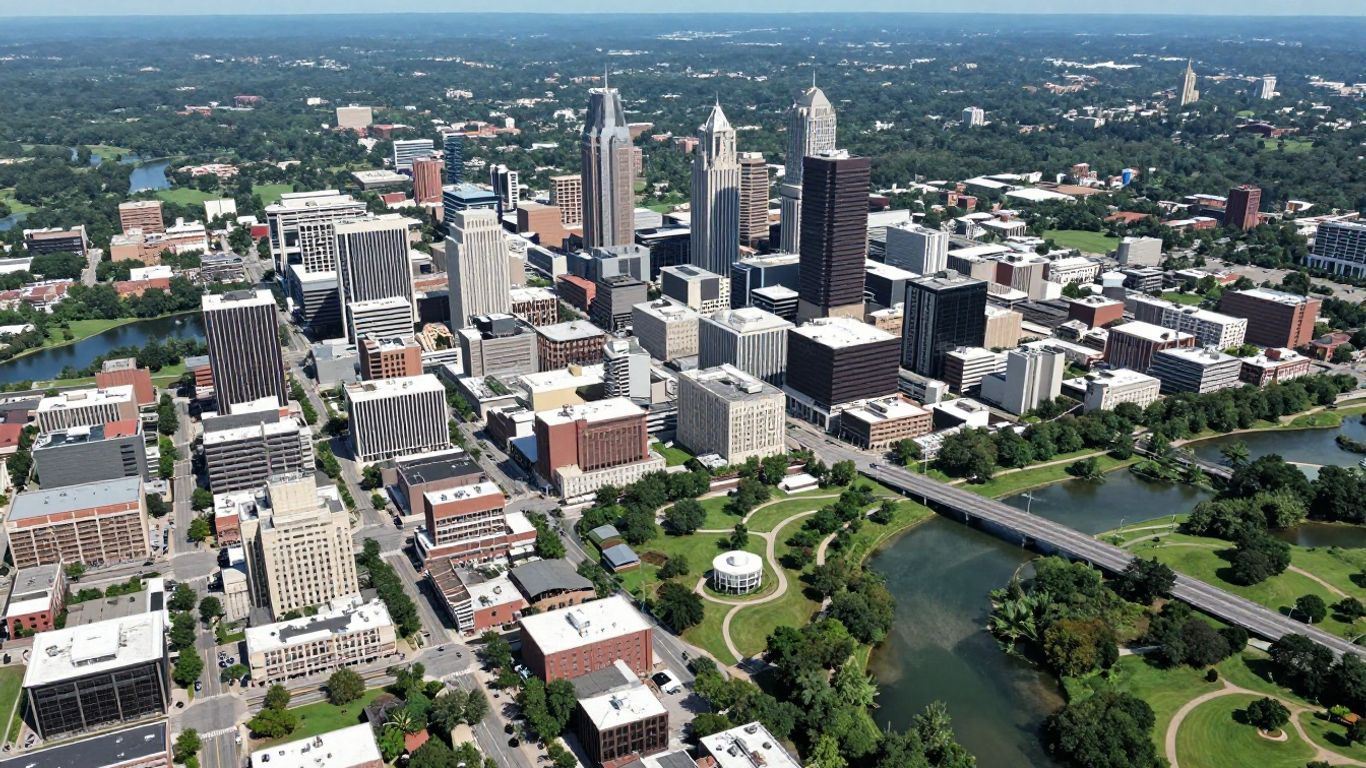
Macon, officially recognized as Macon-Bibb County, is gracefully positioned in central Georgia, directly alongside the historic Ocmulgee River. Often affectionately termed "The Heart of Georgia," this moniker certainly rings true. The river itself has held profound significance for the region over countless centuries, its importance tracing back even to the indigenous Mississippian culture that once thrived here.
Macon's considerable geographic area is, without doubt, a defining aspect of its identity. It's more than just a typical town; it's a place characterized by ample land for growth and widespread development.
Let's take a closer look at its dimensions:
| Metric | Value |
|---|---|
| Total Area | 249.4 sq mi |
This extensive size accommodates a diverse blend of urban infrastructure and pristine natural environments. The Ocmulgee River, in particular, remains a pivotal feature, having indelibly shaped the region's landscape and historical trajectory. It truly offers a compelling illustration of how geographic features have influenced patterns of settlement and economic endeavors across multiple centuries.
The city's strategic location on the fall line of the Ocmulgee River has historically rendered it a crucial hub for trade and transportation—effectively serving as a vital link connecting the state's upper and lower regions.
3. El Paso, Texas
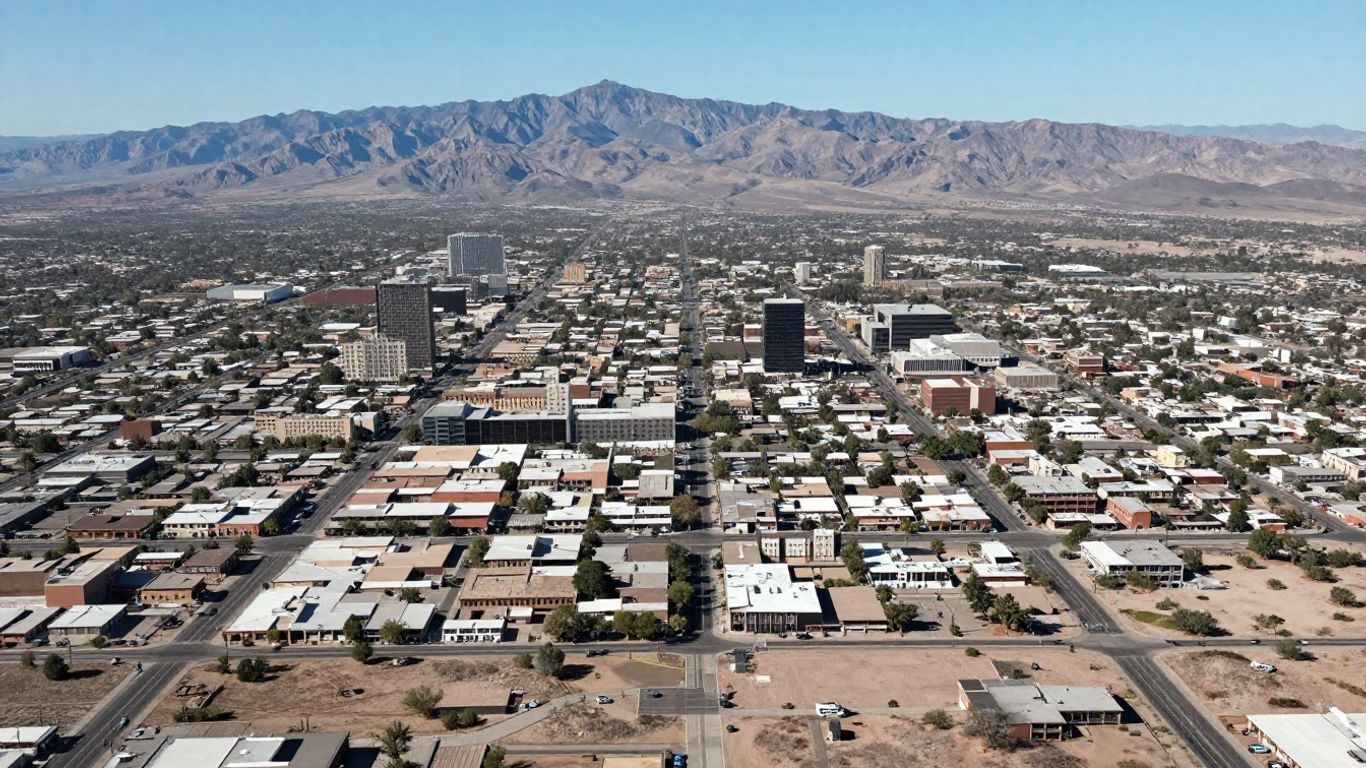
El Paso, Texas, is distinctly situated in the far western reaches of the state, directly abutting the international border with Mexico. This sprawling metropolis encompasses an impressive area of approximately 258.8 square miles.
A truly captivating aspect of El Paso's geography is the manner in which the Franklin Mountains dramatically bisect the city. This natural division creates a discernible eastern and western side, each possessing its own unique character and contributing to the city's distinctive layout and residents' lifestyles. Furthermore, its immediate proximity across the Rio Grande from Ciudad Juárez in Mexico bestows upon El Paso a singularly rich cultural tapestry. The palpable fusion of American and Mexican influences is evident throughout the city, permeating everything from its culinary traditions to its vibrant local customs.
El Paso's strategic geographical position establishes it as a pivotal nexus in international trade and transportation between the United States and Mexico. As a major border crossing, the city's economy benefits immensely from this crucial connection. Yet, its identity extends beyond merely being a border city; El Paso also sustains a robust and expanding economy, with significant foundations in manufacturing and logistics, expertly capitalizing on its advantageous location.
Here's a concise overview of its key characteristics:
- Total Area: 258.8 square miles
- Geographic Feature: Franklin Mountains divide the city
- Cultural Influence: Strong Mexican heritage due to proximity to Ciudad Juárez
Indeed, it is a city profoundly shaped by both its inherent geography and its neighboring communities, forging a distinct and unmistakable identity.
El Paso's unique position at the confluence of two nations ensures it is a place where diverse cultures not only meet but seamlessly intermingle, cultivating a vibrant and dynamic community quite unlike any other in the United States. This prominent border city, therefore, offers a truly unique perspective on contemporary American life.
4. Lexington, Kentucky
Lexington, Kentucky, frequently lauded as the "Horse Capital of the World," commands a notably extensive land area. Nestled in the very heart of the celebrated Bluegrass region—a landscape renowned for its gently rolling hills and, of course, its magnificent horses—this city is much more than just picturesque scenery; it serves as a preeminent global hub for horse breeding and competitive racing.
When contemplating Lexington, iconic venues such as Keeneland and the Red Mile likely spring to mind. These aren't merely local tracks; they are world-famous bastions of thoroughbred racing. The Kentucky Horse Park, another significant draw, provides visitors with an intimate immersion into the fascinating equestrian world. It's quite remarkable, isn't it, how much municipal space is dedicated to supporting and celebrating this vital industry within the city's defined limits?
Here's a brief look at some of its defining attributes:
- Area: 283.9 square miles
- Nickname: "Horse Capital of the World"
- Key Landmarks: Keeneland Race Course, The Red Mile, Kentucky Horse Park
- Region: Bluegrass Region of North-Central Kentucky
The city's profound connection to horses transcends a mere nickname; it is deeply interwoven into the very fabric of its identity and economic prosperity. From the sprawling farms nurturing champion thoroughbreds to the exhilarating atmosphere of race day, this equestrian heritage is a defining characteristic.
Thus, while it may not claim the absolute top spot for landmass, Lexington unquestionably carves out a significant territorial presence for itself, especially given its distinct and unwavering dedication to the equestrian lifestyle.
Wrapping Up Our Look at the Largest Cities by Area
Our journey has now concluded, having offered an intriguing exploration of some of the most expansive cities in the U.S., measured by their physical land area. It’s quite remarkable to contemplate the sheer scale of these urban centers, stretching from one coast to the other. Each city, undoubtedly, possesses its own compelling narrative—a unique interplay of natural landscapes and developed infrastructure. Grasping the magnitude of these sprawling areas provides us with a more comprehensive understanding of our nation's diverse geography and the varied ways in which communities thrive across different regions. Perhaps this overview has sparked your curiosity to personally experience some of these vast urban landscapes, or perhaps it has simply offered a fresh perspective on the intricate tapestry of the United States map. In either case, gaining knowledge about these geographically large cities undeniably enriches our view of the American urban fabric.
Frequently Asked Questions
What does 'largest by area' mean for a city?
When we refer to cities as being 'largest by area,' we are specifically considering the total landmass they encompass, rather than the size of their population. It's akin to evaluating the physical dimensions of various territories, not the number of inhabitants within them.
Are the biggest cities by land area also the most crowded?
Not necessarily; this is a common misconception. Some cities, for instance, may span a vast geographical expanse without accommodating a particularly dense population. Conversely, other urban centers can be remarkably populous yet occupy a comparatively smaller footprint. One might consider the contrast between a sprawling, less developed rural area within city limits versus a bustling, densely packed downtown core.
How do they measure the area of a city?
The area of cities is typically quantified in square miles. This measurement comprehensively includes all land situated within the city's official municipal boundaries, encompassing a wide array of features such as public parks, various buildings, the road network, and even designated water bodies.
Why are some cities so much bigger in land area than others?
The varying land areas of cities often stem from historical development patterns and how urban centers have expanded over time. Some municipalities were initially planned or subsequently grew to incorporate significant surrounding land, while others experienced more organic, incremental growth. Geographical factors—such as proximity to a coastline or mountainous terrain—can also play a substantial role in shaping a city's ultimate size.
Does having a large land area mean a city has more resources?
While an expansive area can certainly provide more physical space for elements like industrial development, recreational parks, or future expansion, it doesn't automatically equate to an abundance of other critical resources such as water or employment opportunities. Essentially, it signifies a greater physical canvas for development, not necessarily a larger reserve of all vital assets.
Can a city's area change over time?
Indeed, municipal boundaries are not always immutable. Cities occasionally undertake annexations, which involve incorporating adjacent land into their jurisdiction, or their borders might be officially readjusted for various reasons. Therefore, a city's stated size is not always a permanently fixed attribute.


